
Dusk Haze Brown can read as a creamy light brown or as a full charcoal-rimmed transformation, depending on iris depth, the weight of the outer ring, skin tone, and the light you happen to stand in.
For anyone comparing brown contact lenses online, the useful question is not whether a shade is natural in the abstract, but which conditions make it look restrained, noticeable, or simply different from the product photo. That matters more with an opaque design, because the same pair can sit close to a natural brown on one face and read as a deliberate colour change on another. LolaDiva presents Dusk Haze Brown as a twilight-haze style: a creamy light brown centre blending into a smoky charcoal ring. The buying decision is therefore about reading those visual cues, not about treating the product image as a universal preview. Want the look for yourself? Shop the LolaDiva Dusk Haze Brown 1-Year Contact Lenses ($5.99)
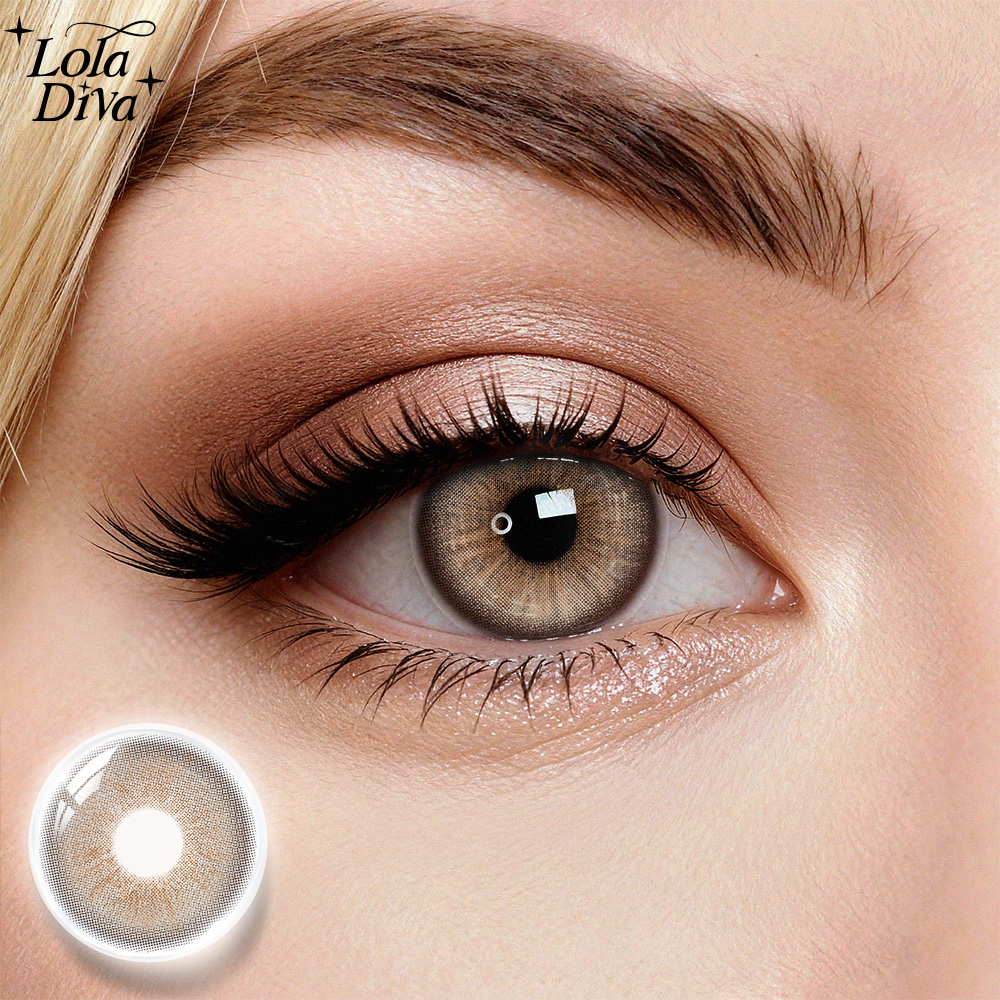
1. The density of your own iris sets the starting point.
 A deep brown iris does not block an opaque lens, but it changes how much of the result reads as layering and how much reads as replacement. Dusk Haze Brown is built as an opaque lens, meaning the pigmented zone is dense enough to cover the natural iris rather than tint it. On medium brown eyes that produces a light brown contact lens look with the original depth still implied at the edges; on very dark eyes the change is more complete, because there is less of the wearer’s own colour left to blend with. Two people can wear the same pair and describe it differently for exactly this reason.
2. The charcoal ring controls how defined the eye looks.
 The outer band of Dusk Haze Brown is a smoky charcoal rather than a hard black line, which is what separates a soft haze from a sharper, more graphic eye. A visible ring draws the edge of the iris and makes the eye read larger and more defined; a softer ring lets the colour fade out and keeps the effect closer to everyday wear. This is the single design detail that decides whether the pair looks like a subtle brown contact lens or like a styling choice for photos, evening looks, and darker makeup.
3. Skin tone and makeup decide whether it reads warm or cool.
 Brown contact lenses are not read on the eye alone. They sit inside a full face where undertone, brows, blush, and clothing either support or fight the shade. Warm makeup and warm hair keep the creamy centre dominant, so the lens reads as a hazel-adjacent light brown. Cooler makeup, cool-toned clothing, or a strong eyeliner look pull the charcoal ring forward and make the same lens read smokier. That shift is why brown contacts on brown eyes can look calm in one styling and dramatic in another without the lens changing at all.
4. Light decides which layer you notice first.
Soft indoor light flattens contrast: the creamy centre spreads and the ring recedes, which is the version most people see at a desk or in a mirror at home. Direct daylight or photography light does the opposite and separates the two zones, so the charcoal edge becomes obvious and the lens looks more styled. If your reference point is a product photo shot under studio light, expect the real-life impression in a dim room to be quieter than that image.
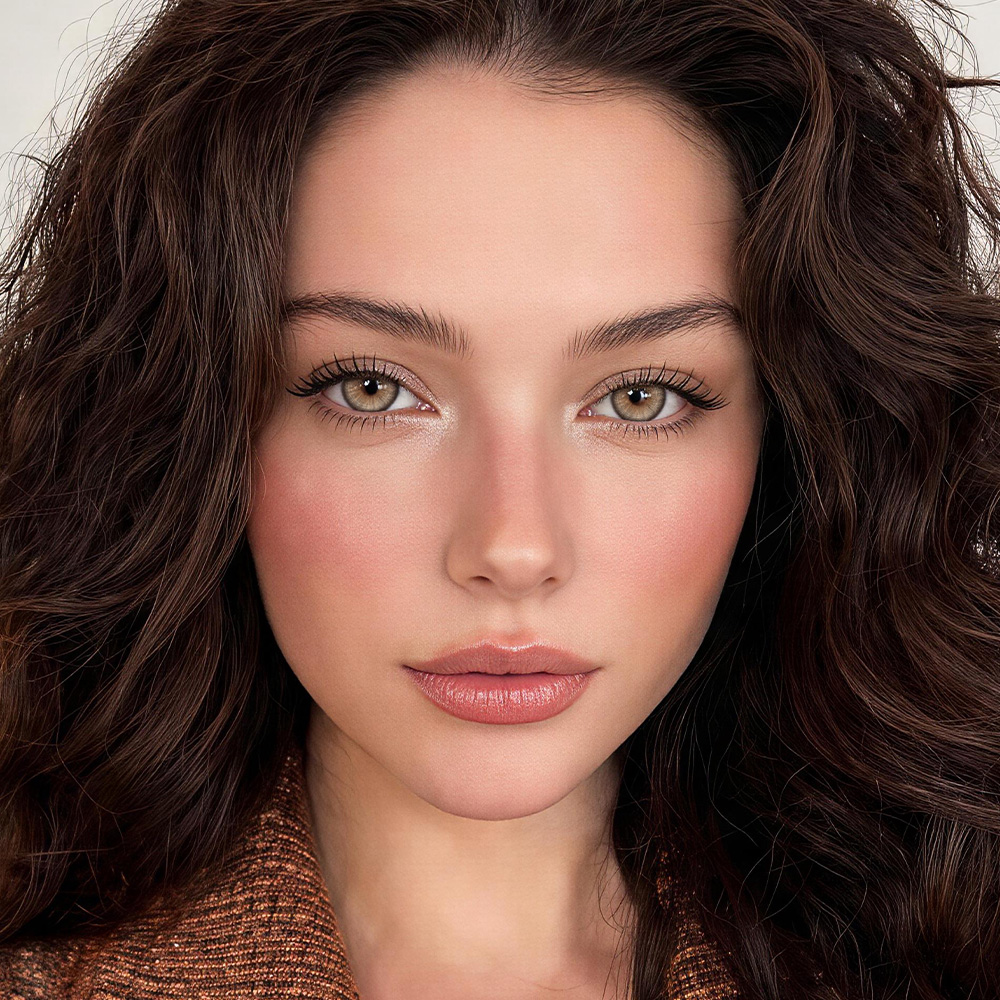
 The naming is more useful than a plain colour label. Dusk haze points to a low-contrast twilight tone rather than a bright caramel, and the two-tone build — creamy light brown inside, smoky charcoal outside — describes the actual layering you will see. Reading the description that way tells you what the lens is aiming for: a light brown contact lens with a defined but not hard edge, closer to evening light than to daylight gold.
The listed specifications describe the product itself rather than promising an outcome. Dusk Haze Brown is a 2pcs, 1-year lens with a 14.2mm diameter and a 13.6mm graphic diameter, so the coloured zone sits inside a fairly standard overall size. It is cast from non-ionic hydrogel with sandwich pigment encapsulation, which keeps the pigment layer sealed inside the material instead of on the surface, and it lists a 40% water content, 8.6mm base curve, 0.08mm centre thickness, and 12 Dk/t oxygen permeability. Those numbers tell you how the lens is made and how it is meant to sit on the eye; they do not guarantee a specific look on a specific iris.
The practical reading is that the product page is a visual reference, not a preview. It explains the intended character of the shade and the format you are buying, while your own iris, the light you are in, and your makeup still shape the final impression.
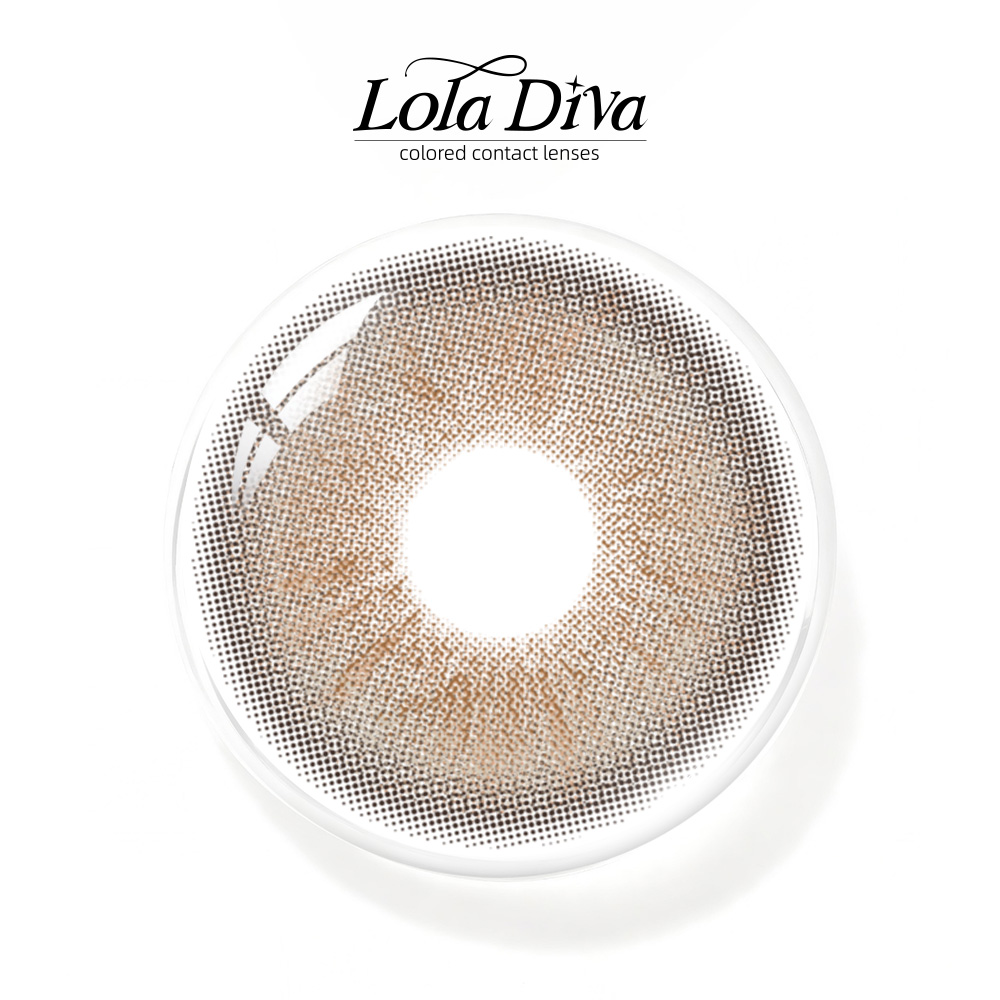
 The phrase colour changing eye contacts is used loosely in search. Sometimes it describes a lens dense enough to fully replace the visible iris colour, and sometimes it is simply a stronger tint that shifts the existing shade. Dusk Haze Brown sits in the first category, because the pigmented zone is opaque and the natural iris is largely covered. That distinction matters when you are shopping: a shopper expecting a translucent tint will find an opaque lens too solid, while a shopper who wants the colour visible on dark eyes will find a tint too weak.
The same gap appears with terms like natural brown contacts. Natural is a description of contrast, not a fixed property of a lens. A brown contact lens looks natural when its depth sits close to the surrounding iris and the ring stays soft in the light you are usually in; it looks obvious when the centre is lighter than the eye, the ring is strong, and the lighting is bright. Checking a product photo against those three conditions is more reliable than comparing marketing adjectives.
For coloured contact lenses in general, the sensible decision path is to match the intended effect to your own iris and styling, confirm fit and prescription needs with an eye care professional, and treat the images as a reference point. Decorative lenses are still contact lenses, and health guidance treats them as products that need proper care and appropriate purchasing.
Dusk Haze Brown is best understood as a condition-based brown: its result depends on iris depth, the strength of the charcoal ring, skin tone, makeup, and light rather than on the colour name alone. That makes it a useful option for shoppers who want a light brown contact lens with more definition at the edge, and a less useful one for anyone expecting a barely-there tint. The practical next step is to look at the ring detail, the two-tone centre, and the listed diameter and material together, then judge whether that combination matches the look you actually want to build.
Q: Do Dusk Haze Brown contact lenses look natural on brown eyes?
A: They can look natural in softer light with warm styling, because the creamy centre sits close to a medium brown iris and the charcoal ring stays muted. In direct daylight or with strong cool-toned makeup the ring becomes more visible, so the effect moves toward a defined, more deliberate look rather than a barely-there one.
Q: Can an opaque brown lens fully cover dark brown eyes?
A: Yes, that is what the opaque build is for. The pigmented zone is dense enough that the natural iris is largely covered, which is why the result on very dark eyes reads as a fuller colour change than the same lens on medium brown eyes. Coverage of colour is a separate question from how the lens fits, which still depends on base curve and diameter.
Q: Is Dusk Haze Brown the same as a colour changing contact lens?
A: In effect, yes, for colour. The lens is designed to replace rather than tint the visible iris colour, which is the practical definition of a colour changing lens. It is not a custom-made product and does not promise an individualised colour result, so the honest expectation is a defined two-tone brown with a smoky edge.
FDA - Decorative Contact Lenses for Halloween and More
American Academy of Ophthalmology - Decorative Contact Lenses
2pcs LolaDiva Dusk Haze Brown | 1-Year Contact Lenses


