
After a busy day, dragging your tired body home, sometimes you wish you could forget everything like taking off makeup. But for contact lens wearers, there's a temptation to watch out for: "Just a quick nap, it'll be fine, right?"
This "quick nap" could be a silent killer for your eye health. At the same time, an enduring urban legend has been scaring us: "If you sleep in your contacts, the lenses will slide to the back of your eyeball!"
Today, let's unravel these two mysteries: Why absolutely cannot you sleep in your contact lenses? And, is that scary story actually true?

Part 1: Why is Sleeping a "Forbidden Zone" for Contact Lenses?
Our cornea is special—it's the only tissue in the body that has no blood vessels and relies entirely on tears and air for direct oxygen supply.
When you're awake, every blink delivers oxygen-rich tears to the cornea. But when you close your eyes to sleep, the situation changes:
1. Corneal Hypoxia: Like Having Your Nose and Mouth Covered
When your eyes are closed, your eyelids have already blocked most of the air. If a contact lens is still covering the cornea at this time—especially a lens with low oxygen permeability—the cornea can fall into a state of severe oxygen deprivation.
Consequence: To obtain oxygen, the cornea desperately grows new blood vessels to "save itself." This can lead to corneal neovascularization, permanently robbing you of your clear, transparent cornea and causing irreversible vision damage.

2. Soaring Infection Risk: A Breeding Ground for Bacteria
At night, tear production decreases dramatically, losing its "rinsing" and "antibacterial" functions. The surface temperature of the eye rises when closed, and the protein deposits left on the lens become the perfect culture medium for bacteria.
Consequence: In medicine, there's a term called "overnight wear," which is the number one risk factor for bacterial keratitis and corneal ulcers. In severe cases, you might wake up after sleeping with excruciating pain, photophobia (light sensitivity), tearing, and might even require a corneal transplant.

3. Lens Adhesion and Protein Denaturation
The lens dehydrates in the dry environment of night, firmly adhering to the cornea. Forcibly removing the lens upon waking could easily tear off a layer of corneal epithelial tissue, causing a corneal abrasion that makes it painful to even open your eyes.
Part 2: Will the Lens Slide to the Back of the Eye? Anatomy Tells You the Truth
Now, let's answer that scariest question: Can contact lenses slide to the back of your eyeball while you sleep?
The answer is: Absolutely not! It's physically impossible!
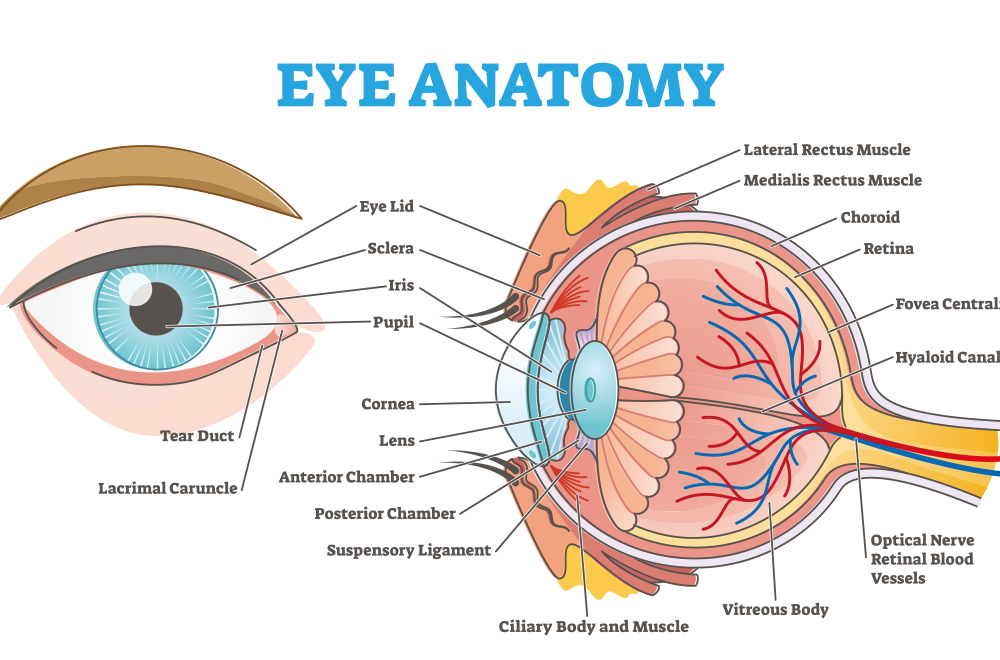
Let's look at the structure of the eye to understand why:
1. The "Barrier" Function of the Conjunctiva
The surface of our eyeball is covered by a thin, transparent mucous membrane called the conjunctiva. This membrane acts like a tight-fitting bodysuit, folding from the front of the eyeball (except the cornea) all the way back to the inside of the eyelids, forming a complete, closed pouch medically known as the conjunctival sac.
No matter how your contact lens slides, it can only move within this "pouch." It is absolutely impossible for it to cross the conjunctiva, "traverse mountains and rivers," and get to the back of the eyeball.
2. Obstruction by Extraocular Muscles and the Optic Nerve
Even if the lens were to breach the conjunctiva (which would require tearing the tissue itself), the back of the eyeball is connected by six strong muscles and the thick optic nerve. These structures firmly anchor the eyeball within the socket; there is simply no pathway for a lens to slide through.
3. The Truth Behind "Going Missing": It's Hiding
What many people refer to as "the lens going to the back" usually happens because:
a. The lens migrated to the superior fornix: The lens may have slid upwards, hiding deep under the upper eyelid (the superior conjunctival fornix). You might feel a hard bump when touching your eyelid, or you might see it by everting the eyelid.
b. The lens fell out: The lens might have fallen out while rubbing your eyes or changing clothes, and you simply didn't notice.
So, rest assured, your contact lenses will never "invade" your brain. They will only ever stay obediently in the "pocket" on the surface of your eyeball.
Bedtime Advice for All Wearers
1. No Matter How Tired, Remove Your Lenses: Even lenses labeled as "overnight wear" with high oxygen permeability are recommended for occasional use only under a doctor's guidance, not as a daily habit. Removing your lenses isn't just taking off a piece of plastic; it's lifting a burden from your eyes for the whole night.
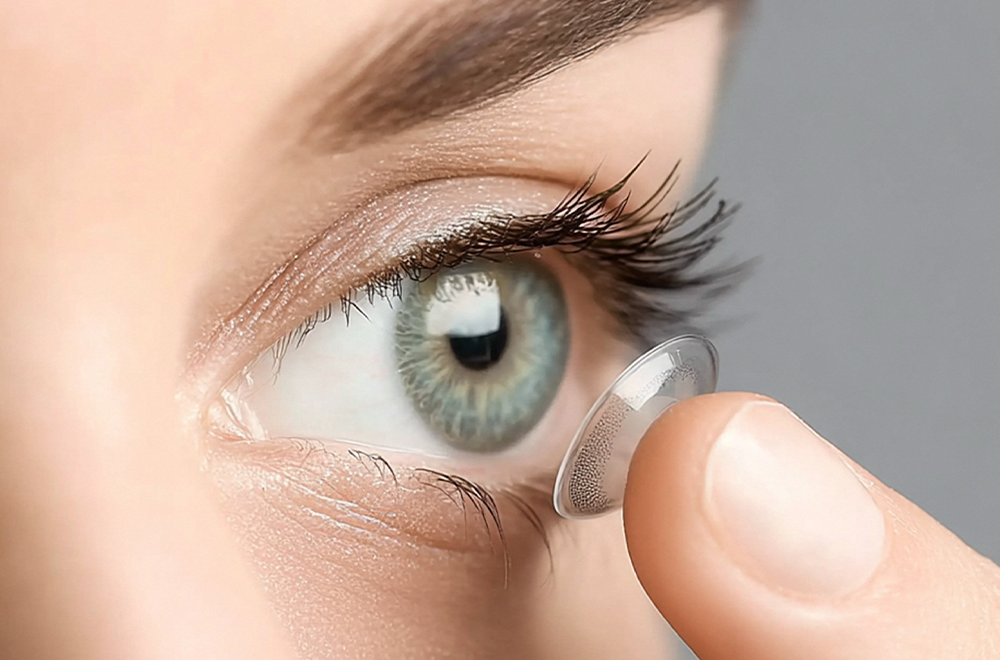
2. Prepare a Spare Pair of Glasses: Keep a pair of glasses on your nightstand or at the office. Give your eyes a chance to "breathe" when they feel uncomfortable, or when you're just too tired.

3. If You Wake Up and Forgot to Remove Them: Don't forcibly rub your dry eyes! First, apply a few drops of artificial tears, close your eyes, and gently roll them around. Wait for the lens to become moist and moveable before attempting removal. If your eyes are already red, swollen, and painful, seek medical attention immediately.

The eyes are the windows to the soul. Don't let these windows, once closed for the night, fail to open brightly again. Remember to take good care of them tonight.


