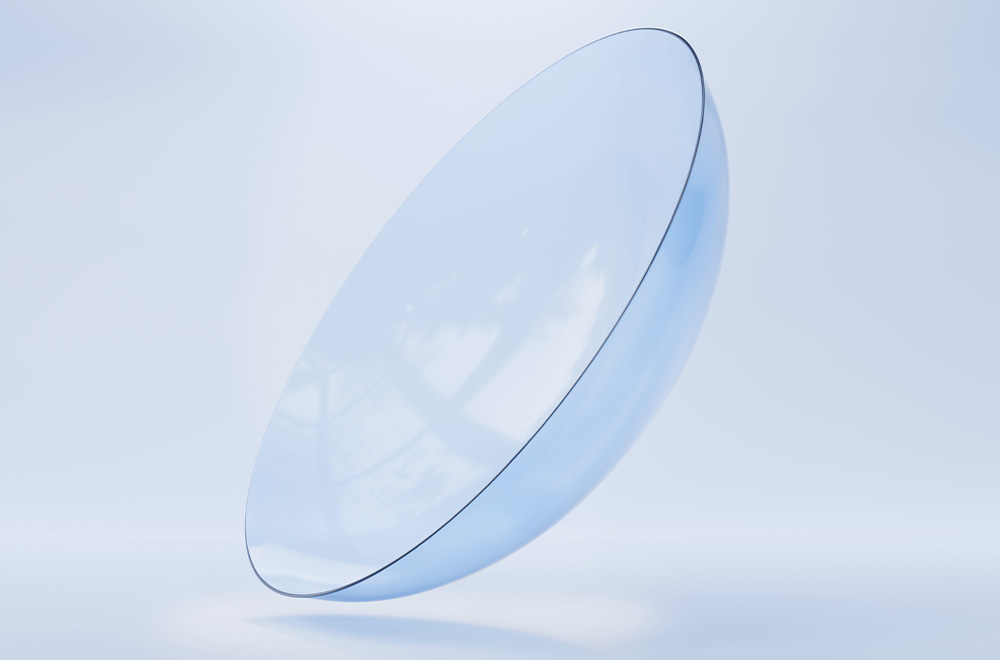
If you have ever held a contact lens up to the light, you have probably wondered: what are contacts made of? That tiny, nearly invisible disc is actually one of the most precisely engineered medical devices you will ever put on your body. The material inside your contact lens determines everything—how much oxygen reaches your cornea, how comfortable your eyes feel at 8 PM, and whether your colored lenses are actually safe to wear.
In this guide, we break down the exact polymers, plastics, and pigments used in modern contact lenses. We answer not just what are contacts made of, but what are contacts made out of at the molecular level. We use clinical data, ISO-certified measurements, and real-world wear scenarios so you can choose lenses based on science, not marketing.

--------------------------------------------------------------------------------
Why Contact Lens Material Matters More Than Brand Name
Most buyers pick contacts by brand or price. That is a mistake. The contact lens material inside the lens dictates:
• Oxygen flow to your cornea (measured in Dk/t or oxygen transmissibility units)
• All-day comfort and end-of-day dryness
• Risk of protein deposits and eye irritation
• Whether colored pigments touch your eye directly
Your cornea has no blood vessels. It breathes by absorbing oxygen from the air through your tear film. If the lens material blocks that oxygen, you get hypoxia—redness, swelling, and blurred vision. The material is not a detail. It is the entire product.
Some people ask: are contacts plastic? The short answer is yes—but not the kind of plastic you are thinking of.
Contact lenses are made from medical-grade polymers engineered for eye safety, not grocery bags. Others wonder: are contact lenses bad for your eyes? Only if you choose the wrong material or skip proper care. So are contacts plastic? Yes, but specialized medical plastic.
--------------------------------------------------------------------------------
The Three Main Contact Lens Material Families
Modern contacts fall into three categories based on their core polymer chemistry. Each family solves a different vision and comfort problem.
--------------------------------------------------------------------------------
H3Soft Hydrogel Lenses: The Original "Water-Loving" Plastic
What are soft contacts made of? Hydrogel contact lenses were the first soft lenses approved by the FDA. If you are asking what is a soft contact lens, the answer starts with hydrophilic polymers—plastics that absorb and retain water.
The most common base polymer is poly-2-hydroxyethyl methacrylate, abbreviated as pHEMA or simply HEMA.
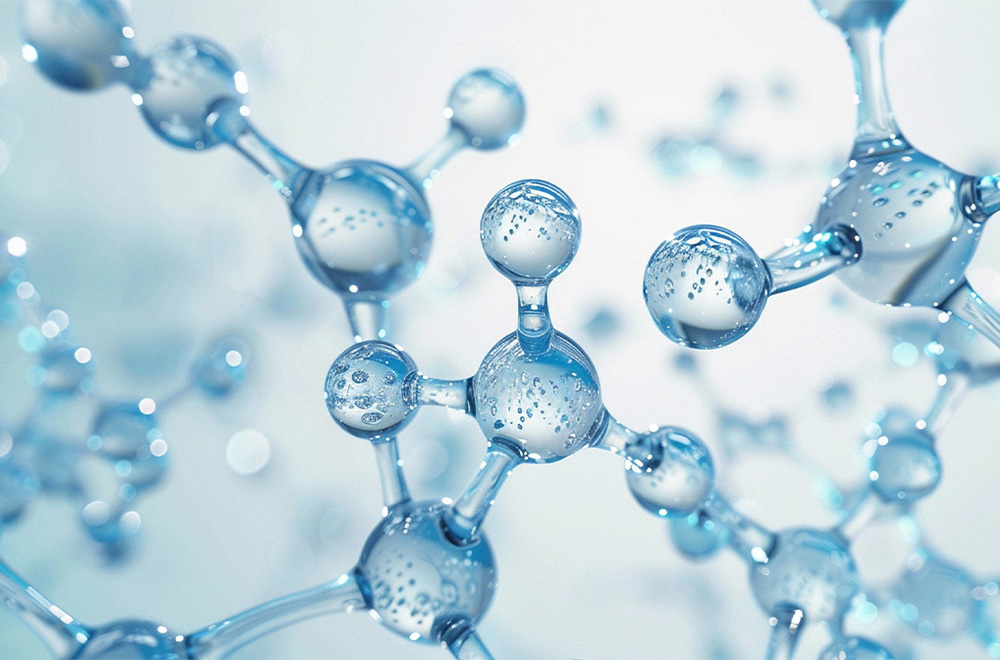
How HEMA works:
• HEMA chains form a mesh that traps water molecules inside the lens matrix
• When hydrated, the lens becomes soft and flexible
• When it dries out, it turns brittle and can crack
Water content in hydrogel lenses ranges from 38% to 75% by weight. That water is not just for comfort—it is the oxygen delivery system. Oxygen dissolves in the water and diffuses through the lens to reach your cornea.
FDA groups hydrogel materials into four categories based on water content and surface charge:
| FDA Category |
Water Content |
Surface Charge |
Example Use Case |
| Category 1 |
Low (<40%) |
Non-ionic |
Longer wear, less dehydration |
| Category 2 |
High (>60%) |
Non-ionic |
Sensitive eyes, comfort priority |
| Category 3 |
Low (<40%) |
Ionic |
Better wettability, more deposits |
| Category 4 |
High (>60%) |
Ionic |
High comfort, frequent replacement |
The catch? Hydrogel lenses rely entirely on water to transport oxygen. Once the water evaporates during wear—especially in air-conditioned offices or windy environments—the lens dehydrates. A dehydrated hydrogel lens becomes less permeable to oxygen. It can actually pull moisture out of your eye, making dryness worse. That is why many experienced wearers now prefer silicone hydrogel contact lenses for daily wear. These silicone hydrogel contact lenses solve the dehydration problem by adding oxygen channels that do not rely on water alone.
If you are asking what are conventional contact lenses, the answer is hydrogel. Before silicone hydrogel arrived in the late 1990s, nearly all soft contact lenses were conventional hydrogel. They are still popular today for their low cost and immediate comfort.
Some wearers worry: do contact lenses hurt your eyes? Hydrogel lenses should not hurt if fitted correctly. Pain usually signals dehydration or poor fit. If you wonder how long contact lenses can be worn, hydrogel lenses are generally approved for 8–12 hours daily, not overnight.
If you prefer the classic feel and affordability of hydrogel lenses, LolaDiva offers FDA/CE/ISO-certified options with modern safety upgrades:
LolaDiva
1-Year Colored Contact Lenses — Non-ionic hydrogel lenses with sandwich-encapsulated pigments that never touch your cornea. Low-water-content design resists protein deposits. Stable color all 365 days. Only $5.99/pair.
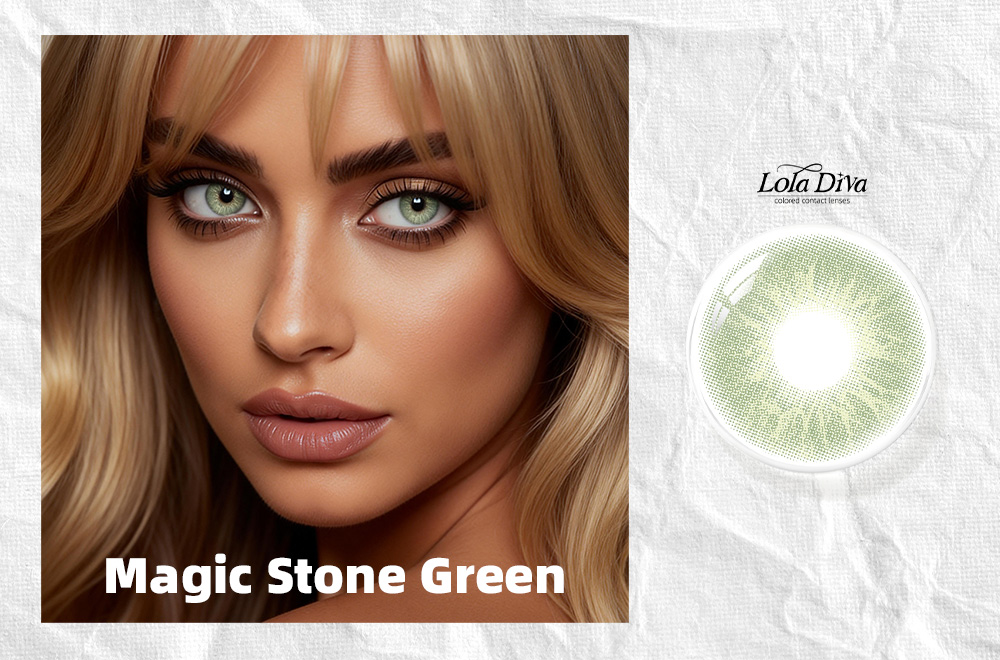
• LolaDiva Magic Stone Green 1-Year Contact Lenses — Non-ionic hydrogel base with sealed pigment layer. Low surface charge reduces deposit buildup for year-round comfort.
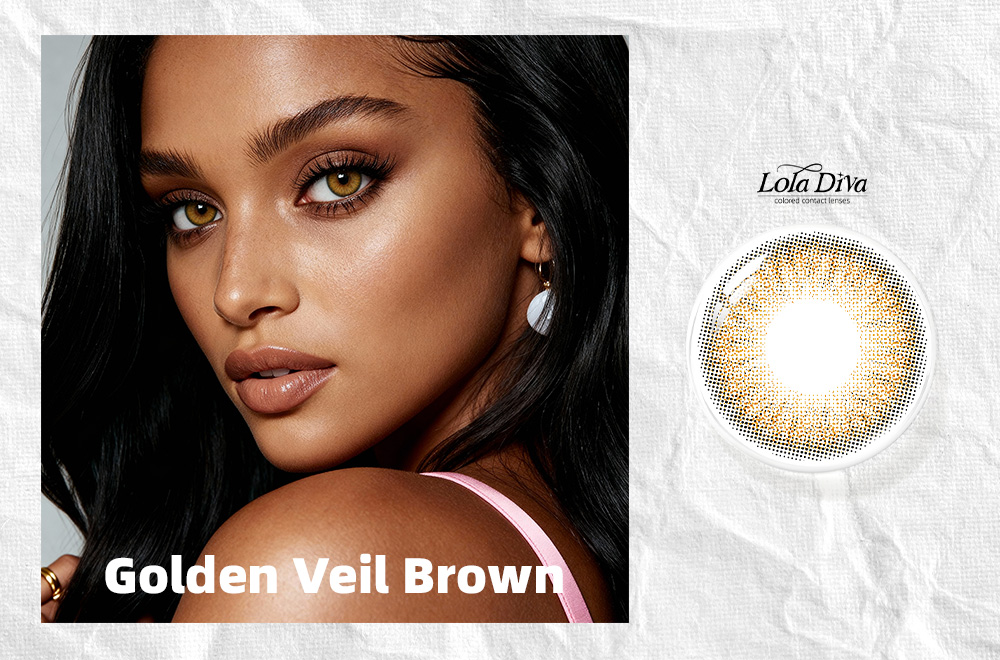
 • LolaDiva Golden Veil Brown 1-Year Contact Lenses
— Sandwich-technology color lens. Encapsulated pigments sit between two clear hydrogel layers—zero direct eye contact.
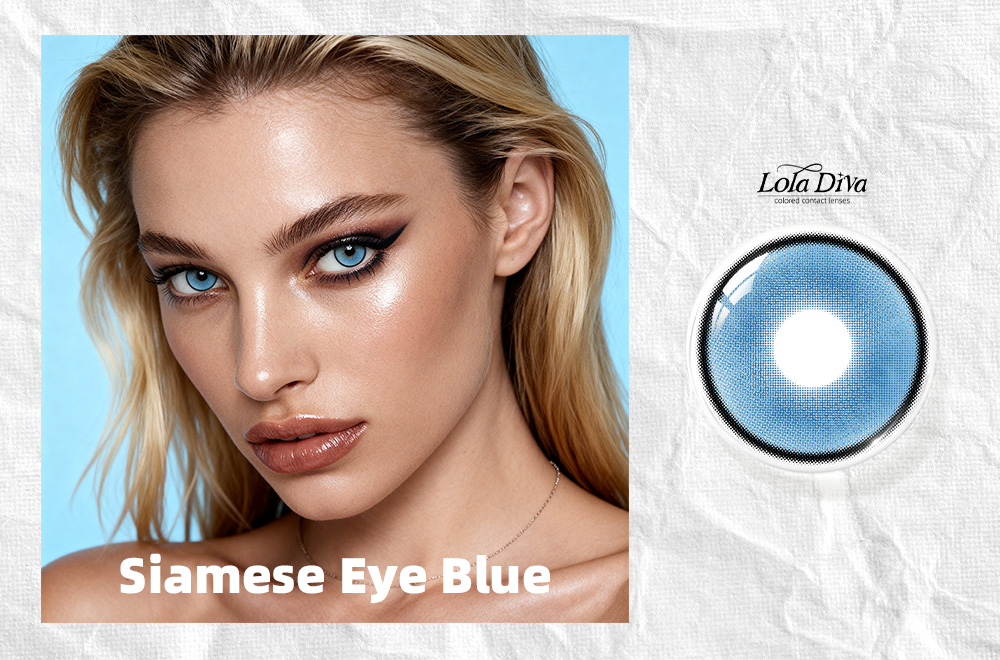
 • LolaDiva Siamese Eye Blue 1-Year Contact Lenses
— Medical-grade non-ionic hydrogel with stable 38% water content. Balanced hydration without the dehydration-driven oxygen drop of high-water lenses.
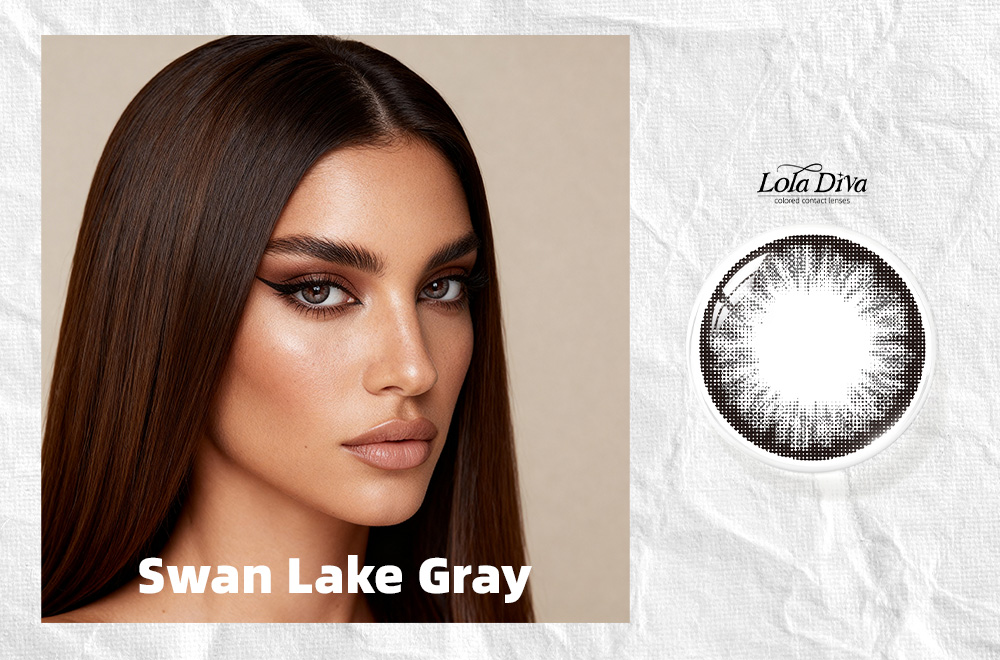
 • LolaDiva Swan Lake Gray 1-Year Contact Lenses
— Biocompatible hydrogel material with CE-certified pigment encapsulation. Non-ionic surface minimizes deposit accumulation over 12 months of wear.
 LolaDiva Daily Colored Contacts
— Polymacon-based daily disposables with sandwich-technology pigments. Fresh HEMA material every day means zero protein deposits and zero maintenance. As low as $1.99/pair.
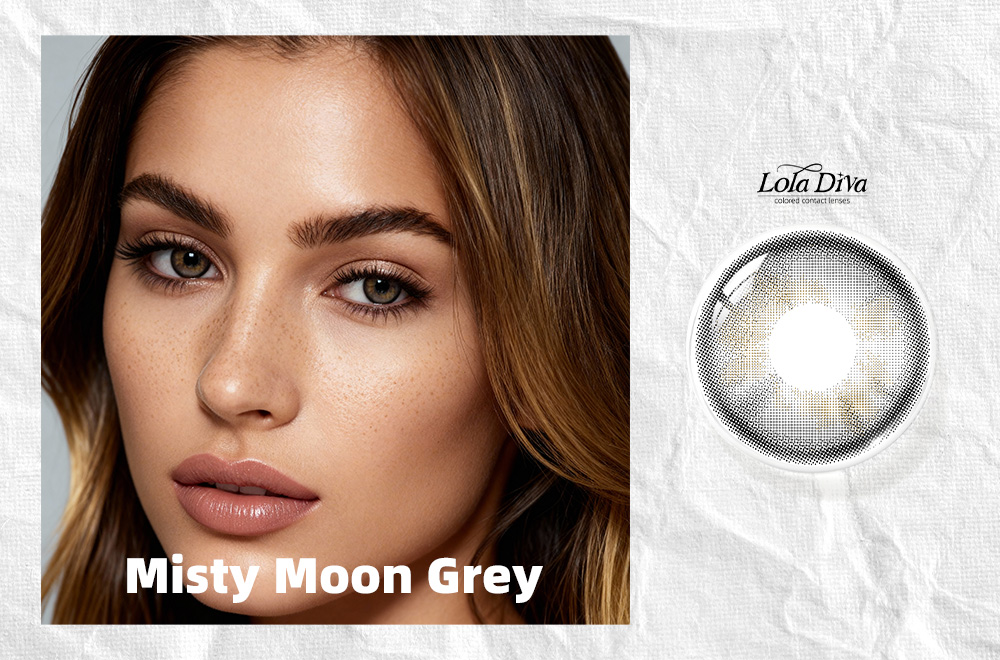
• LolaDiva Misty Moon Grey 1-Day Contact Lenses — Single-use Polymacon hydrogel with encapsulated iris pigment. No cleaning, no deposit buildup—fresh pHEMA material every morning.
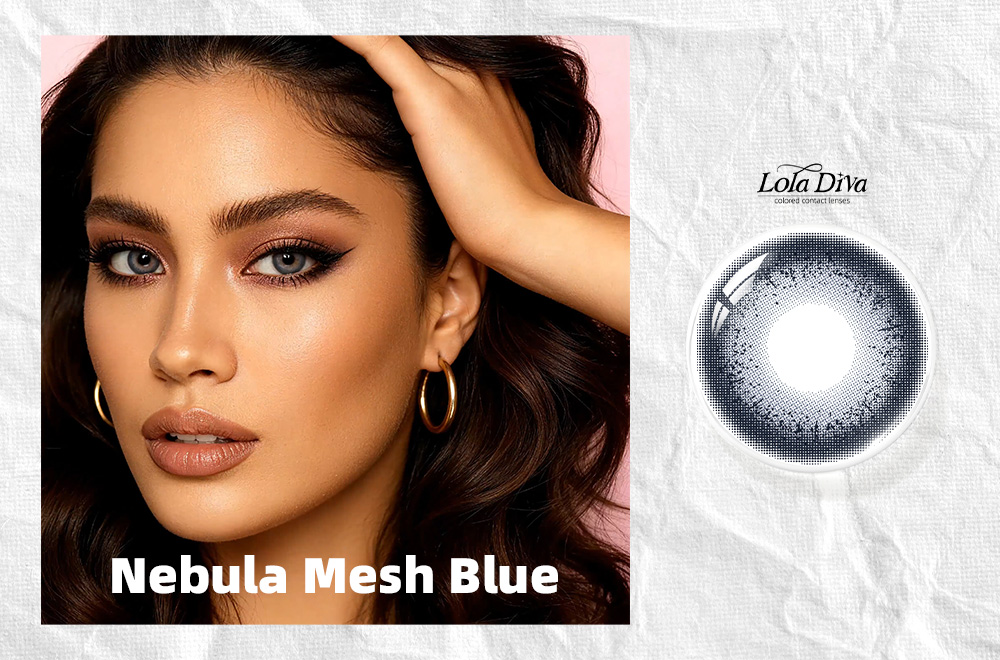
 • LolaDiva Nebula Mesh Blue 1-Day Contact Lenses
— Daily replacement eliminates dehydration risk. Premium HEMA-based matrix with sealed color layer for safe cosmetic enhancement.
 • LolaDiva Velvet Honeydew Brown 1-Day Contact Lenses
— FDA-certified daily disposable Polymacon lens. Biocompatible hydrophilic surface with no pigment exposure. Perfect for sensitive eyes and first-time colored lens wearers.
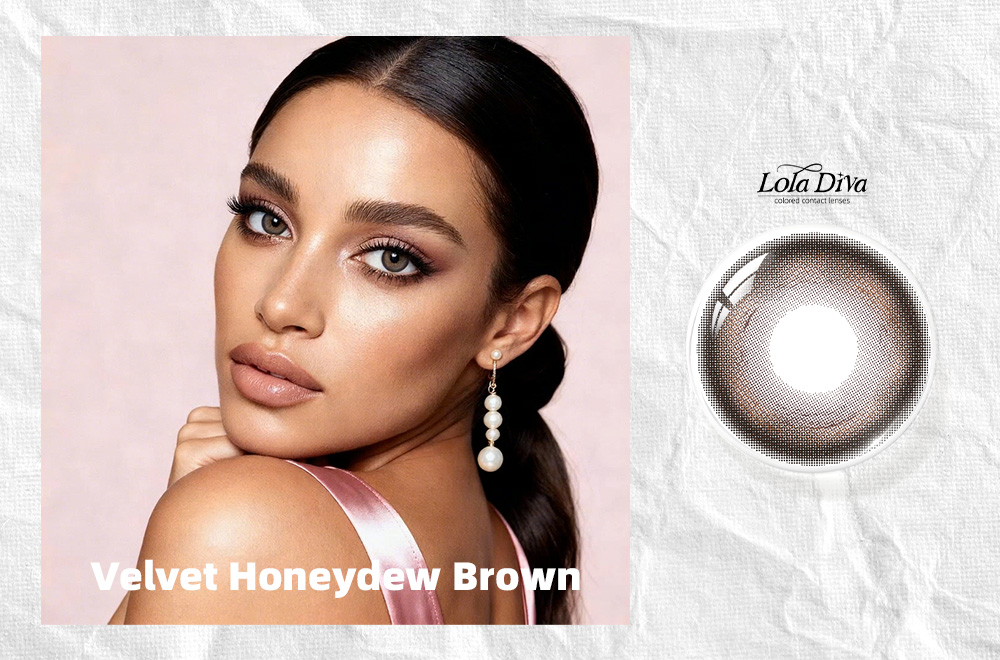 LolaDiva Hydrogel Clear Lenses
— Classic hydrogel lenses with balanced water content for natural all-day moisture. 2-week, 1-month, and 1-year options from $14.99/pair.
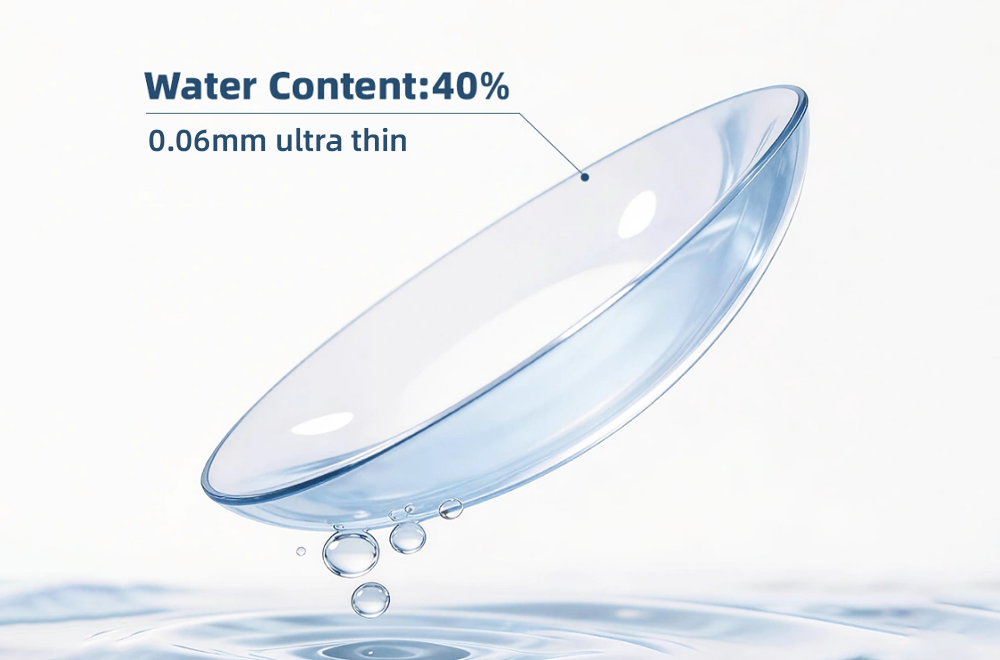 • LolaDiva Clear Contacts 2-Week Contact Lenses
— Hydrogel polymer with optimized water retention. Frequent replacement reduces protein deposit accumulation and hypoxia risk.
• LolaDiva Clear Contacts 1-Month Contact Lenses — Medical-grade pHEMA-based material with smooth hydrophilic surface. Ideal for wearers who prefer moderate replacement cycles.
• LolaDiva Clear Contacts 1-Year Contact Lenses — Durable hydrogel construction with consistent oxygen transmissibility. CE-certified for long-term visual correction with proper contact lens care.
--------------------------------------------------------------------------------
Silicone Hydrogel Lenses: The Oxygen Game-Changer
Silicone hydrogel contact lenses are the most significant material breakthrough in contact lens history. They combine hydrogel water retention with silicone-based oxygen channels. The result: oxygen permeability that is roughly 5× higher than traditional hydrogel lenses.
Here is the science in numbers. A landmark 2007 study published in Optometry and Vision Science measured the actual Dk values (oxygen permeability) of major silicone hydrogel brands:
| Lens Brand |
Material Name |
Measured Dk |
Water Content |
Lens Thickness |
| Focus Night & Day |
Lotrafilcon A |
162.0 |
23.0% |
Ultra-thin |
| Acuvue Oasys |
Senofilcon A |
107.4 |
36.9% |
Standard |
| O2 Optix |
Lotrafilcon B |
80.5 |
32.1% |
Standard |
| PureVision |
Balafilcon A |
75.9 |
35.8% |
Standard |
| Acuvue Advance |
Galyfilcon A |
75.2 |
46.5% |
Standard |
| 1-Day Acuvue |
Etafilcon A |
21.0 |
~58% |
Thin |
| Standard Hydrogel |
Seequence |
8.2 |
36.6% |
Thin |
Notice something counter-intuitive? The highest-performing lens (Focus Night & Day) has only 23% water content—far lower than many hydrogel lenses. That is because silicone transports oxygen through silicone molecule chains, not through water. This makes silicone hydrogel lenses less prone to dehydration and safer for extended wear.
Silicone hydrogel lenses now account for approximately 72% of all soft contact lenses fitted worldwide. They are the default choice for daily wear, extended wear, and most colored contact lenses.
For wearers who need the highest oxygen delivery and all-day stability, LolaDiva's silicone hydrogel line delivers clinical-grade performance:
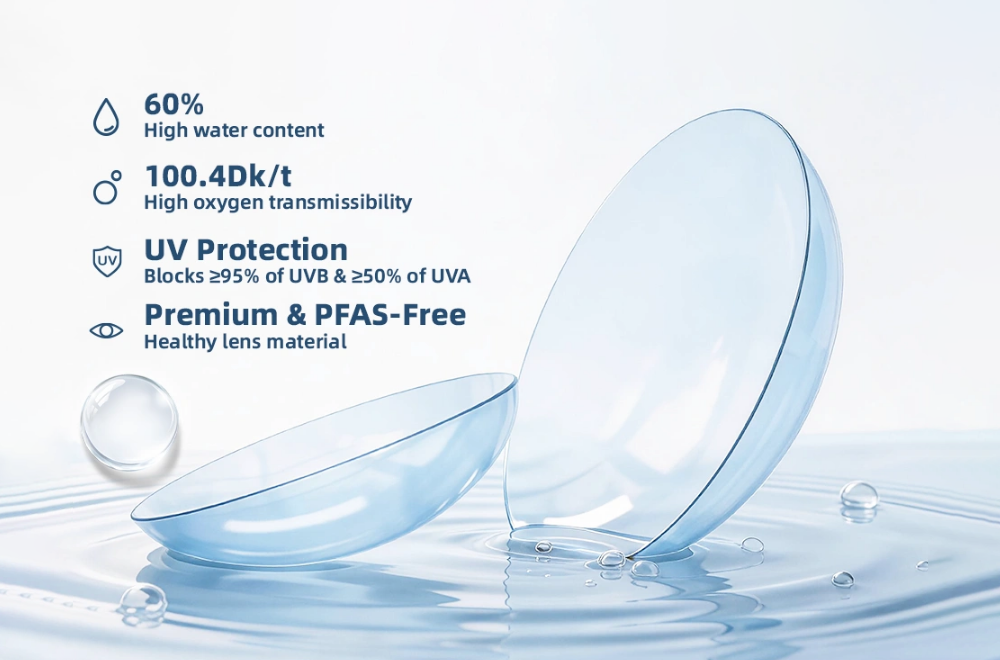 LolaDiva Silicone Hydrogel Daily Clear Lenses
, PFAS-Free — FDA & CE Certified with 100.4 Dk/t oxygen permeability and UV blocking. True silicone hydrogel channels deliver all-day corneal breathability. Only $0.99/lens.
• LolaDiva Clear Contacts 10-Pack 1-Day Contact Lenses — Ultra-high Dk/t silicone hydrogel for maximum oxygen delivery. PFAS-free polymer with no harmful fluorinated additives.
• LolaDiva Clear Contacts 30-Pack 1-Day Contact Lenses — Daily disposable silicone hydrogel with built-in UV protection. No dehydration-driven oxygen drop—stable comfort from 8 AM to midnight.
• LolaDiva Clear Contacts 60-Pack 1-Day Contact Lenses — Premium silicone-acrylate hybrid material. 100.4 Dk/t rating exceeds standard hydrogel by 5×. Ideal for screen-heavy days and dry office environments.
• LolaDiva Clear Contacts 90-Pack 1-Day Contact Lenses — Bulk daily disposables with certified silicone hydrogel construction. Fresh lens material every day means zero protein deposits and zero preservative solution exposure.
--------------------------------------------------------------------------------
Rigid Gas Permeable (RGP) Lenses: The "Hard" Lens That Breathes
What are hard contacts made of? If you have ever asked what are eye contacts made of when looking at rigid options, the answer is surprising: RGP lenses are made from durable polymers that contain silicone and fluorine.
Unlike soft contact lenses, they contain almost no water. Instead, oxygen flows through microscopic pores in the rigid material itself.
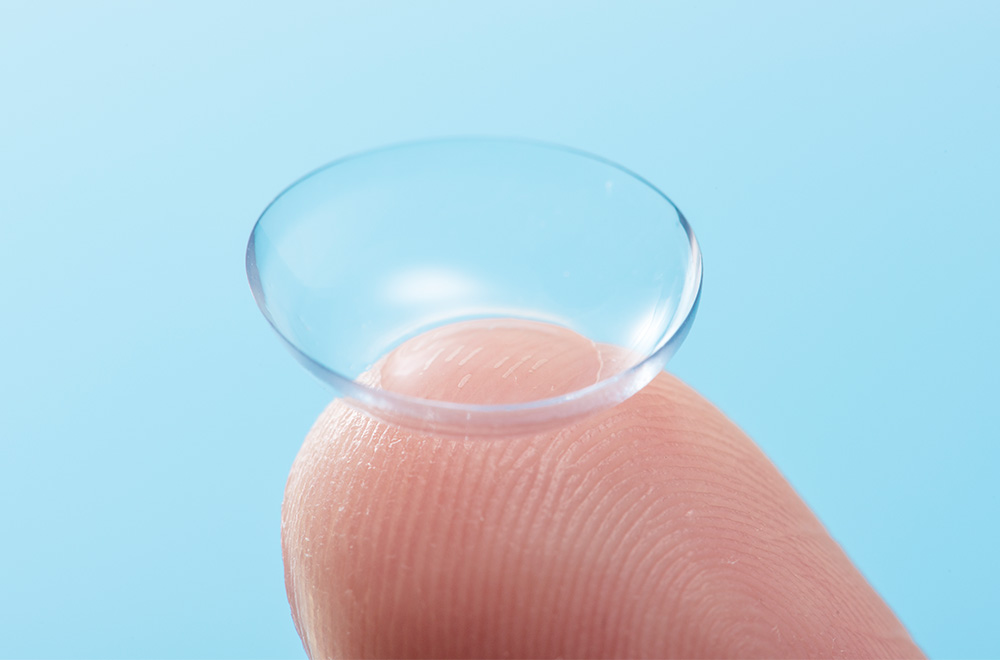
Before modern RGP materials existed, hard lenses were made from polymethyl methacrylate (PMMA). PMMA had excellent optical clarity but zero oxygen permeability, causing severe hypoxia. That is why PMMA was phased out in favor of gas-permeable alternatives.
Some readers ask: are contact lenses made of glass? Historically, yes—the first contact lenses in the 1880s were actually glass shells. But modern lenses, even rigid ones, are made from advanced polymers, not glass.
If you are wondering what are hard contact lenses, they are rigid gas-permeable lenses made from silicone-acrylate polymers. What are rgp contact lenses exactly? They are the modern version of hard lenses, designed to let oxygen pass through the material. What are gas permeable contact lenses? What are rigid gas permeable contact lenses?
Both names refer to the same technology: rigid lenses with microscopic pores that allow gas (oxygen) to permeate through.
RGP materials are classified by their Dk value:
Dk ClassificationDk RangeTypical UseLow Dk< 12Rarely prescribed todayMedium Dk15–30Standard RGPHigh Dk31–60Extended wear RGPSuper Dk61–100High oxygen demandHyper Dk> 100Specialty fittings
RGP lenses provide sharper vision than soft lenses because their rigid surface does not warp when you blink. They are also more durable—one pair can last 1–2 years with proper care. However, they require a longer adaptation period (days to weeks). They are less common today except for specific conditions like keratoconus or high astigmatism. Toric RGP designs are available for corneal astigmatism that exceeds what soft toric lenses can correct.
People often ask: can contact lenses correct astigmatism? Yes—both soft toric lenses and RGP lenses can correct astigmatism. In fact, RGP lenses often provide better astigmatism correction because their rigid shape masks corneal irregularities. If you want to know what is astigmatism contact lenses, they are specially designed lenses with different powers in different meridians. What is toric contact lenses? Toric is the technical term for astigmatism-correcting lenses—they have a weighted bottom to maintain proper orientation on the eye.
--------------------------------------------------------------------------------
Hybrid Contact Lenses: The Best of Both Worlds
Hybrid lenses combine a rigid RGP center with a soft hydrogel or silicone hydrogel outer skirt, bridging the gap between hard optics and soft contact lenses comfort. The rigid center provides crisp optics, while the soft skirt improves comfort and keeps the lens centered on the eye.
SynergEyes is the leading hybrid lens brand in the United States. Hybrids are prescribed for:
• Keratoconus and irregular corneas
• Presbyopia (multifocal hybrid designs)
• Patients who failed with soft lenses but cannot tolerate full RGP
If you are asking what are multifocal contact lenses, they are lenses with multiple power zones for near and far vision. What are bifocal contact lenses? They have two distinct power zones, similar to bifocal glasses. What are progressive contact lenses? They offer a gradual power transition from center to edge. And what is presbyopia contact lenses? Presbyopia is the age-related loss of near focus; multifocal and bifocal contacts are designed to correct it.
--------------------------------------------------------------------------------
What Are Colored Contacts Made Of? Inside the Sandwich
If you are asking what are contacts made of when it comes to cosmetic lenses, the answer starts with the same base polymers.
Colored contact lenses use the same base materials as clear lenses—hydrogel or silicone hydrogel—but with one critical addition: a pigment layer.
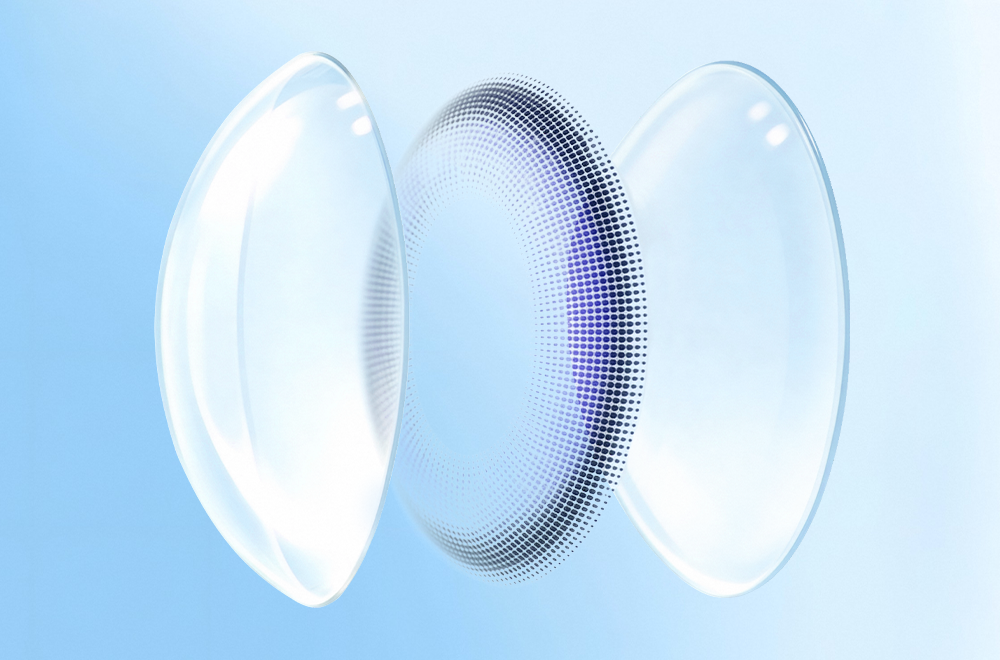
The safety of that pigment layer depends entirely on how it is embedded. Premium colored contacts use sandwich technology (also called encapsulation technology). Here is how it works:
1.A clear base layer of lens material is cast
2.Medical-grade pigments are printed in the desired iris pattern
3.A second clear layer is fused on top, sealing the pigment inside
Think of it like a photograph sealed between two sheets of glass. Your eye never touches the pigment. The outer surface is smooth, biocompatible, and identical to a clear lens.
Why this matters: cheap costume lenses often use surface printing, where pigment sits directly on the lens surface. That rough pigment layer can scratch your cornea. It can leach chemicals into your tear film and flake off into your eye. Surface-printed lenses are not medical devices—they are eye hazards.
When you buy colored contacts, verify the manufacturing method. If the seller cannot confirm sandwich technology, do not put those lenses in your eyes. FDA and CE certification requirements exist precisely to prevent these unsafe products from reaching consumers.
Many buyers ask: are coloured contact lenses safe? The answer is yes—if they use sandwich technology and carry FDA/CE certification. But do colored contact lenses damage your eyes? Only if you buy cheap surface-printed lenses from unverified sellers. Always choose medical-grade colored contacts.
--------------------------------------------------------------------------------
The Counter-Intuitive Truth About Water Content
Here is a fact that most lens wearers—and even some sellers—get wrong: higher water content does not always mean better comfort.
Hydrogel lenses with 60–75% water content feel great for the first four hours. But high-water lenses lose moisture faster in dry environments. When they dehydrate, they become less oxygen-permeable. They can actually draw water out of your cornea to rehydrate themselves. The result? Worse end-of-day dryness than a lower-water silicone hydrogel lens.
Silicone hydrogel lenses typically have 24–46% water content. Because oxygen flows through silicone channels instead of water, they maintain consistent oxygen delivery even when the lens surface dries slightly. For all-day wear—especially in offices, airplanes, or air-conditioned rooms—silicone hydrogel is usually the more stable choice.
This is the hydrogel contact lenses vs silicone hydrogel contact lenses debate in one sentence: water content drives initial comfort, but oxygen permeability drives end-of-day eye health.
--------------------------------------------------------------------------------
How Contact Lens Materials Are Manufactured
Understanding what are contacts made of also means understanding how are contact lenses made and how are contacts made. Modern contact lens manufacturing follows a seven-step process:
1.Lens Design: Computer software calculates the exact base curve, diameter, and optical power based on the prescription. If you have ever wondered what is bc of contact lenses or what does bc mean in contact lenses, BC stands for base curve—the curvature that matches your cornea. What is base curve in contact lenses? It is measured in millimeters and determines how the lens sits on your eye.
2.Material Selection: The manufacturer chooses between hydrogel, silicone hydrogel, or RGP polymer based on the lens type.
3.Mold Creation: Precision metal molds are machined to micron-level accuracy.
4.Casting: Liquid polymer monomers are injected into the mold and polymerized using UV light or heat.
5.Hydration: For soft lenses, the dry polymer is hydrated in sterile saline until it reaches target water content.
6.Surface Treatment: Some lenses receive plasma treatment or coating to improve wettability and reduce protein deposits.
7.Inspection & Packaging: Every lens is inspected for optical defects, then sealed in sterile blister packs with buffered saline.
For colored lenses, the pigment printing step occurs between casting and the final sealing layer—hence the "sandwich" structure.
If you are curious where are contact lenses made, major manufacturing hubs include Ireland, Singapore, Malaysia, and the United States. Most leading brands produce lenses in ISO-certified facilities regardless of location.
--------------------------------------------------------------------------------
FAQ: Contact Lens Materials
If you are still asking how are contact lenses made in simple terms, the answer is medical-grade polymers shaped by precision molds. Still wondering what are contacts made out of in plain terms? Here are the most common questions we hear about lens composition.
Q: What are daily contacts made of?
A: What are daily contact lenses made from? Daily disposable contacts are made from hydrogel or silicone hydrogel. The material is the same as monthly lenses; the difference is the replacement schedule, not the polymer.
Q: What are monthly contact lenses?
A: What are monthly contact lenses? They are lenses designed for 30 days of daily wear with proper cleaning and storage. They are typically made from silicone hydrogel or conventional hydrogel.
Q: Are contacts biodegradable?
A: No. Contact lenses are medical-grade plastics and do not biodegrade. Never flush them down the toilet—they break down into microplastics. Use manufacturer recycling programs where available.
Q: What is the safest material for beginners?
A: Silicone hydrogel is generally the safest starting point for new wearers because of its high oxygen permeability and all-day comfort stability.
Q: Can I be allergic to contact lens material?
A: True material allergies are rare. Most "allergies" are actually reactions to preservative solutions, protein deposits, or dry eye. If you suspect a reaction, switch to preservative-free solutions and consult your eye doctor.
Q: Are colored contacts made of different material than clear contacts?
A: The base polymer is the same. The difference is the encapsulated pigment layer. Always choose sandwich-technology colored lenses to ensure the pigment never contacts your eye.
Q: What are hard contacts made of compared to soft contacts?
A: Many people searching what are eye contacts made of are surprised to learn that hard and soft lenses share no common base polymer. Hard contacts (RGP) are made from rigid silicone-acrylate polymers with fluorine additives. Soft contacts are made from flexible hydrogel or silicone hydrogel polymers that contain significant water content.
Q: Do non-prescription colored contacts use the same materials?
A: Yes. Non-prescription colored contacts and prescription colored contacts use identical base materials. The difference is only the visual correction power. Always verify FDA or CE compliance regardless of prescription status.
Q: How to clean and store lenses?
A: If you are asking how to clean soft contact lenses, use multipurpose solution and rub gently for 20 seconds. For how to clean monthly contact lenses, the process is the same—clean, rinse, and disinfect every night. To how to store contact lenses, keep them in a clean case filled with fresh solution, never water.
Q: What is power in contact lenses?
A: What is the power for contact lenses? Power (measured in diopters) corrects your vision prescription. What is power in contact lenses exactly? It is the strength of the lens, usually ranging from -20.00 to +20.00 diopters.
Q: What is axis in contact lenses?
A: What is axis in contact lenses? The axis (0–180 degrees) specifies the orientation of astigmatism correction in toric lenses. It ensures the lens aligns correctly on your cornea.
Q: Are contact lenses safe?
A: Are contact lenses safe? Yes, when used correctly with FDA/CE-certified products. Follow replacement schedules, wash your hands before handling, and never sleep in lenses not approved for extended wear.
--------------------------------------------------------------------------------
Medical Disclaimer
This article is for informational purposes only and does not constitute medical advice. Contact lenses are FDA/CE-regulated medical devices. Always consult a licensed optometrist or ophthalmologist before starting, switching, or discontinuing contact lens wear. Never purchase contact lenses from sellers that do not require a valid prescription or that cannot verify their manufacturing standards. Proper contact lens care is essential for preventing infections and maintaining cornea health.
--------------------------------------------------------------------------------
Choosing the Right Material for Your Eyes
Now that you know what are contacts made of and what are contacts made out of, you can shop with confidence.
Look beyond the brand name and check the contact lens material:
• Silicone hydrogel for all-day oxygen delivery and comfort stability
• Hydrogel for short-term wear or specific moisture needs
• RGP for maximum optical clarity and long-term durability
• Hybrid for complex prescriptions like keratoconus or presbyopia
• Sandwich-technology colored lenses for safe cosmetic enhancement
Your eyes deserve transparency—starting with the material inside the lens.


