You open a fresh box of contacts and see "BC 8.6" printed on the side.
Most people shrug and move on to the power number. But that two-digit code? It's the single most important factor determining whether your lenses feel invisible or like sandpaper by 3 PM.
BC stands for Base Curve — the curvature of the back surface of your contact lens, measured in millimeters. It dictates how tightly your lens hugs your cornea. Get it wrong, and even the most expensive daily disposables will leave you with red, irritated eyes and blurry vision.
At LolaDiva, we fit thousands of colored contact lenses every month. We've seen customers order the "same BC" from a different brand and end up with lenses that slide off-center within an hour. We've also watched people tolerate a too-steep fit for months, assuming discomfort was just "part of wearing contacts." It isn't.
This guide breaks down everything you need to know about what is bc of contact lenses — from how doctors measure it, to why colored lenses behave differently, to the exact warning signs that mean your BC is off. No generic advice. Just the data and first-hand insights we use in our own fitting process.
What Does BC Mean on Contact Lenses? The Science in Plain English
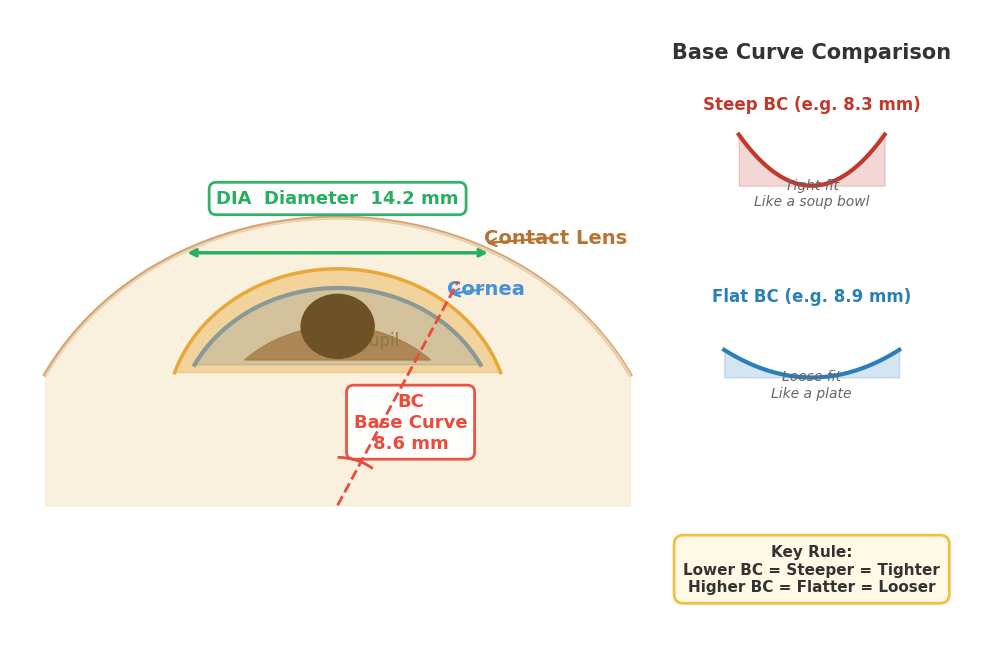
BC (Base Curve) — or what does bc mean in contact lenses — measures the radius of curvature of the lens's back surface.
Think of it this way: your cornea is a dome. Your contact lens is a second, thinner dome that sits on top of it. The base curve tells you how "steep" or "flat" that second dome is.
Here's the counterintuitive part:
Lower BC number (e.g., 8.3mm) = Steeper curve. The lens is more rounded, like a soup bowl.Higher BC number (e.g., 8.9mm) = Flatter curve. The lens is shallower, like a plate.
For soft contact lenses, BC typically ranges from 8.0mm to 9.5mm, with most falling between 8.3mm and 8.7mm.
But here's what most guides won't tell you: BC is not the whole story. A lens with BC 8.6 and DIA 14.5mm fits completely differently than a lens with BC 8.6 and DIA 14.0mm. The diameter changes how the lens "drapes" across your eye — effectively tightening or loosening the fit regardless of the BC number on the box.
This is why professional fitting matters. Your eye doctor doesn't just look at one number. They look at the entire lens-eye relationship.
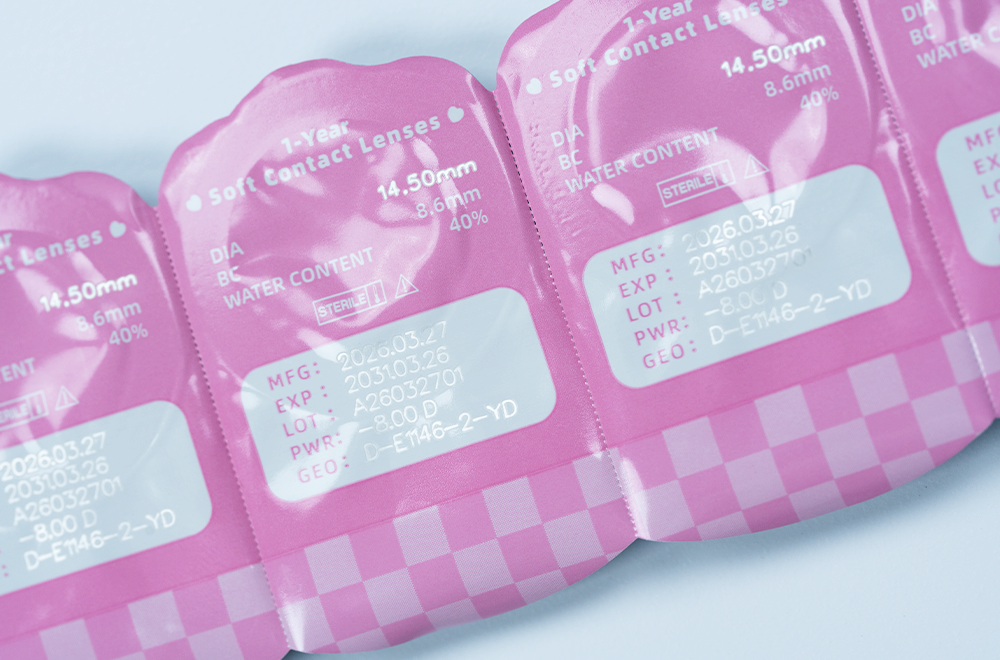
LolaDiva Hydrogel Clear Lenses — BC 8.6mm, DIA 14.2mm, hydrogel, 38% water. 2-week, 1-month, 1-year options, from $14.99/pair.
2-Week Trial Pack — The safest way to confirm your BC 8.6mm baseline before switching to colored lenses. Low commitment, full comfort data.
1-Month Standard — Exactly four weeks of daily wear. Perfect for users who want a predictable replacement rhythm without yearly stock.
1-Year Value Pack — Lowest cost-per-wear. For confirmed BC 8.6mm wearers who've already tested comfort and want long-term savings.
Why Base Curve Matters: What Happens When It's Wrong
A poorly fitted base curve doesn't just cause discomfort. It can damage your cornea over time.
When BC Is Too Steep (Too Low a Number)
The lens clamps down like a suction cup. Tears can't circulate underneath. Oxygen can't reach your cornea.
Symptoms you'll feel:
Persistent redness that worsens throughout the dayA "stuck" feeling — the lens is hard to remove at nightDry, gritty sensation by afternoonPressure or tightness, especially when blinking
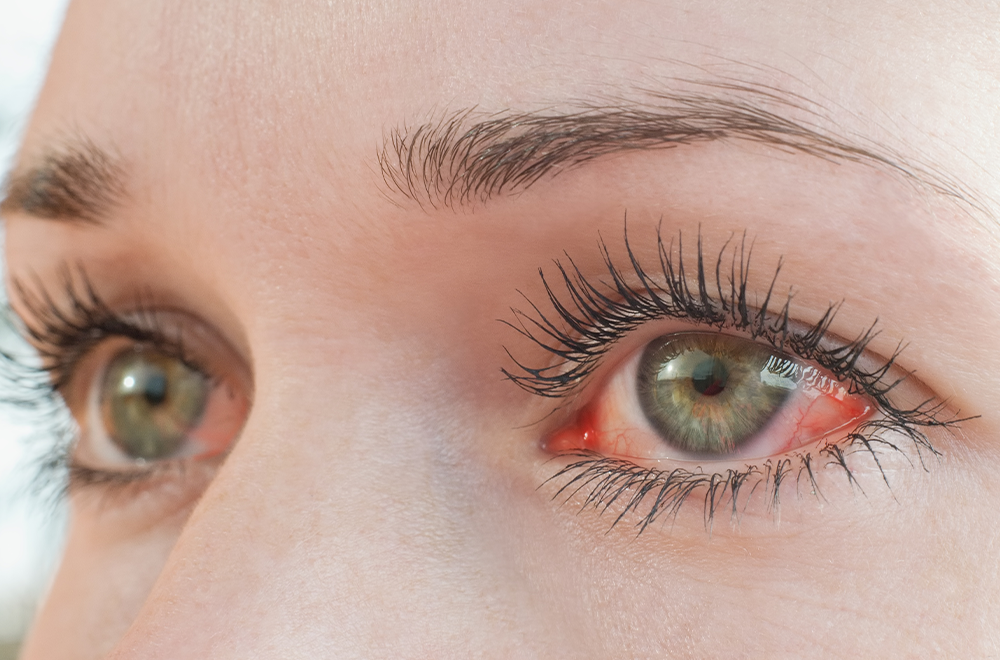
The hidden risk: Corneal hypoxia. Your cornea has no blood vessels. It breathes directly from the air. A too-tight lens suffocates it. Over weeks or months, this can lead to corneal neovascularization — blood vessels growing into your cornea to compensate for oxygen deprivation. This is irreversible.
When BC Is Too Flat (Too High a Number)
The lens slides around with every blink. It never centers properly over your pupil.
Symptoms you'll feel:
Vision that blurs right after blinking, then sharpensThe lens physically sliding off-center (you can feel it move)Constant awareness that you're wearing contactsThe lens feeling like it might fall out during exercise.
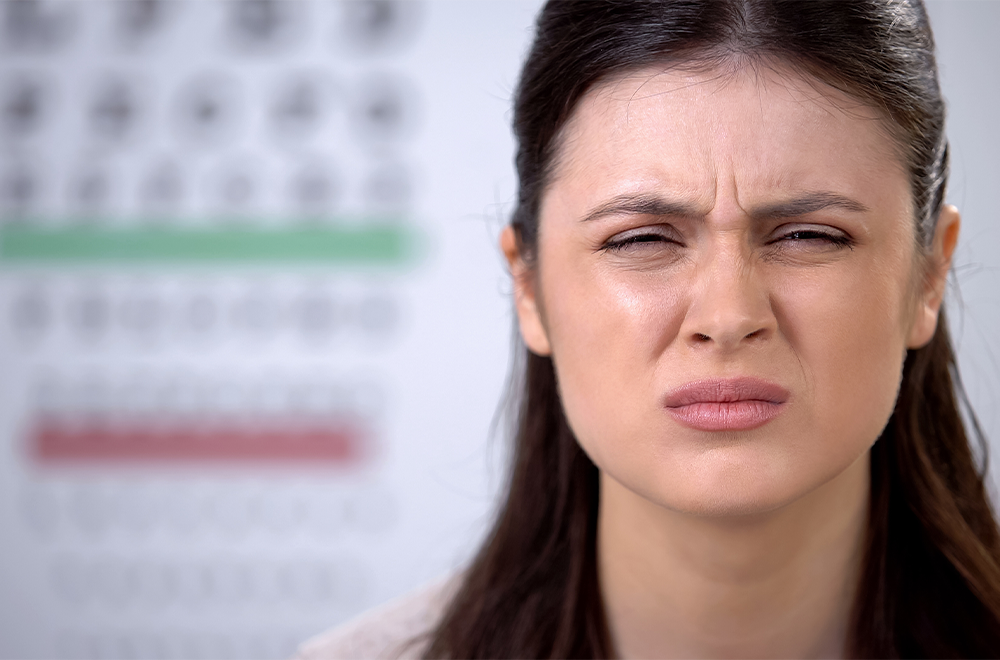
The hidden risk: Mechanical irritation. All that sliding creates friction against your cornea and the inside of your eyelid. Over time, this can cause corneal abrasions or giant papillary conjunctivitis (GPC) — tiny bumps forming on the underside of your eyelid that make lens wear unbearable.
LolaDiva Silicone Hydrogel Daily Clear, PFAS-Free — BC 8.6mm, DIA 14.2mm, silicone hydrogel, high oxygen. Daily disposables, safer for eyes and planet, $0.99/lens.
10-Pack Trial — First time trying silicone hydrogel? Start here. Experience 5× oxygen flow vs standard hydrogel with minimal upfront cost. Best for sensitive eyes or anyone switching from monthly lenses to daily disposables.
30-Pack Monthly Supply — Four weeks of zero-maintenance vision. Pop in a fresh lens each morning, toss at night. No cleaning, no storage, no protein buildup. Designed for busy professionals and frequent flyers.
60-Pack Two-Month Value — Double the quantity, better per-lens pricing. For wearers who've confirmed silicone hydrogel works for their eyes and want to cut down on monthly checkout clicks.
90-Pack Quarterly Stock — Lock in the lowest daily cost. Three full months of premium oxygen delivery without reordering. The smart choice for daily disposable devotees who know exactly what their corneas need.
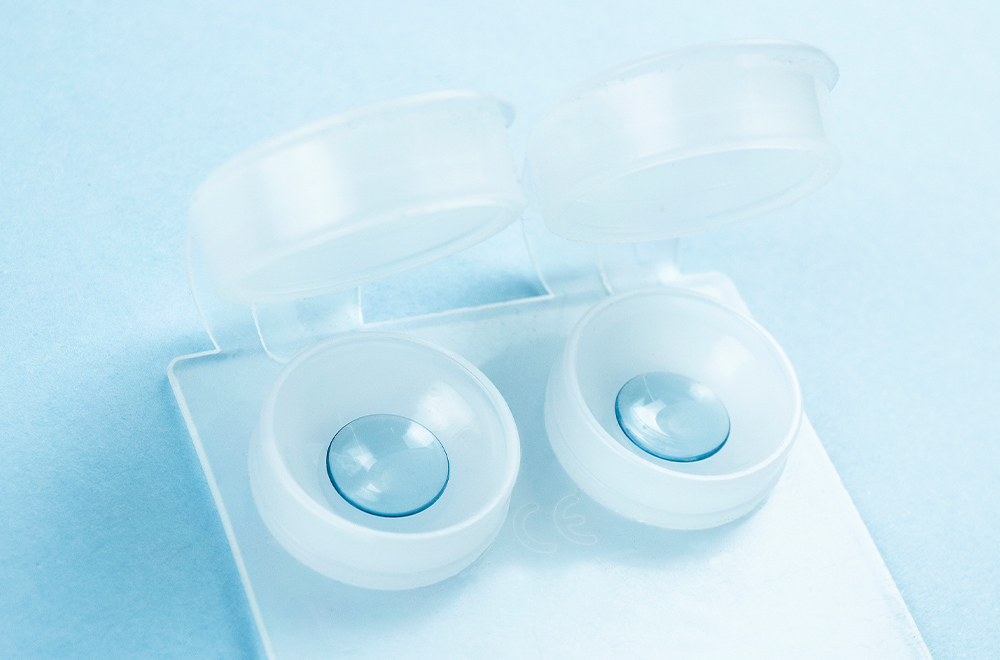
The rule is simple: A properly fitted lens should feel like nothing. If you're constantly aware of it, something is wrong.
How Eye Doctors Measure Your Base Curve (And Why You Can't Get Fitted for Contact Lenses at Home)
The Keratometer: The Classic Tool
Your doctor uses a keratometer to shine a lighted pattern onto your cornea and measure how the light reflects back. This gives them "K-readings" — the curvature of your cornea in diopters, which they convert to a base curve recommendation.
The process takes about 2 minutes. It's completely painless and non-contact.
The Corneal Topographer: The Gold Standard
For a more detailed picture, doctors use corneal topography. This creates a 3D color map of your entire corneal surface — not just the center.
Why does this matter? Because your cornea isn't perfectly spherical. Most people have some degree of astigmatism, meaning their cornea is steeper in one direction and flatter in another. A simple keratometer reading might miss this, leading to a base curve recommendation that works in one meridian but not the other.
The Slit Lamp Evaluation: Where the Real Art Happens
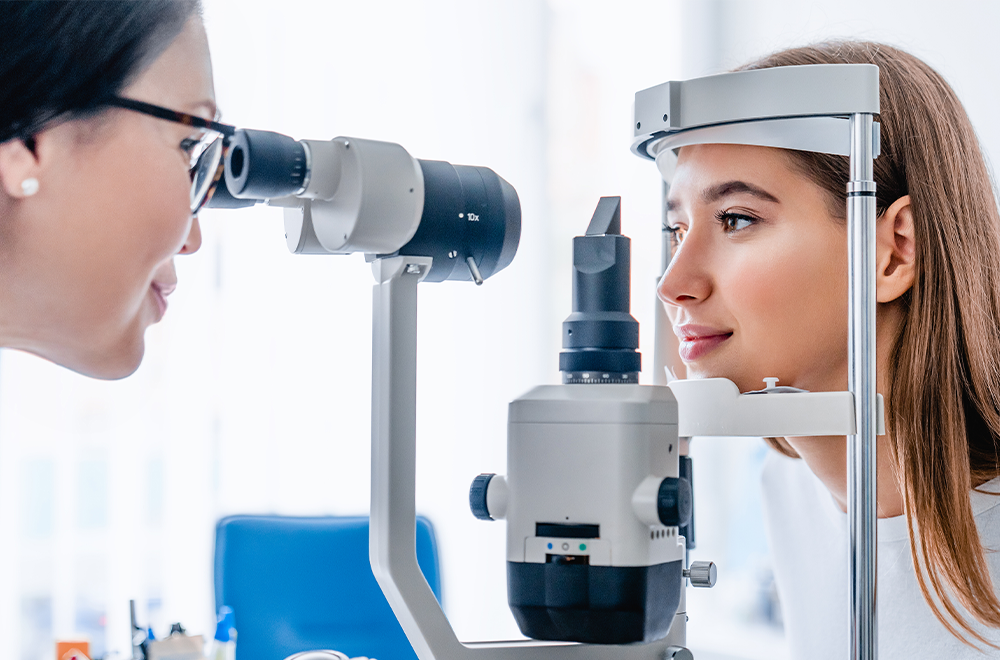
After taking measurements, your doctor places a trial lens on your eye and examines it under a slit lamp (a high-powered microscope). They're checking three things:
Centration: Does the lens sit directly over your pupil, or does it drift?Movement: Does it shift 1–2mm with each blink? (This is healthy — it allows tear exchange.) Coverage: Does the lens completely cover your cornea, with at least 0.5mm overlap past the limbus?
Based on these observations, your doctor may try a slightly steeper or flatter BC to dial in the perfect fit. This hands-on evaluation is why how to get fitted for contact lenses by a professional is non-negotiable.
Base Curve vs. Diameter: What Does DIA Mean in Contact Lenses and Why You Can't Look at One Number in Isolation
Here's the "secret" most contact lens guides miss: BC and DIA work together.
A larger diameter increases the "sag" of the lens — how deeply it sits into your eye. This effectively tightens the fit, even if the BC number stays the same.
|
Scenario
|
BC
|
DIA
|
Effective Fit
|
|
Tight
|
8.4mm
|
14.5mm
|
Very snug — high sag
|
|
Medium
|
8.6mm
|
14.2mm
|
Average fit
|
|
Loose
|
8.6mm
|
14.0mm
|
Flatter feel — low sag
|
|
Very Loose
|
8.8mm
|
14.0mm
|
Likely to slide
|
This is why switching brands with the "same BC" is dangerous. If Brand A uses DIA 14.5mm and Brand B uses DIA 14.0mm, the same BC number will produce completely different fits.
At LolaDiva, we see this constantly with customers switching from clear lenses to colored lenses. Colored contacts often have a slightly larger diameter (14.2–14.5mm) to accommodate the pigmented ring. Even if the BC matches your clear lens prescription, the larger DIA can make the colored lens feel tighter. This is why we always recommend a fresh fitting when switching to colored contacts — especially if you're trying a new brand.

Colored Contact Lenses & Base Curve: What Makes Them Different
Colored contacts aren't just clear lenses with dye added. The manufacturing process changes the lens architecture in ways that affect fit.
The Pigment Layer Adds Thickness
The colored ring on a cosmetic lens is an additional layer embedded in the lens material. This adds thickness to the periphery, which can:
Reduce flexibility, making the lens feel stiffer on the eyeAlter how the lens drapes across the corneaChange the effective base curve "feel" even if the stated BC matches your prescription
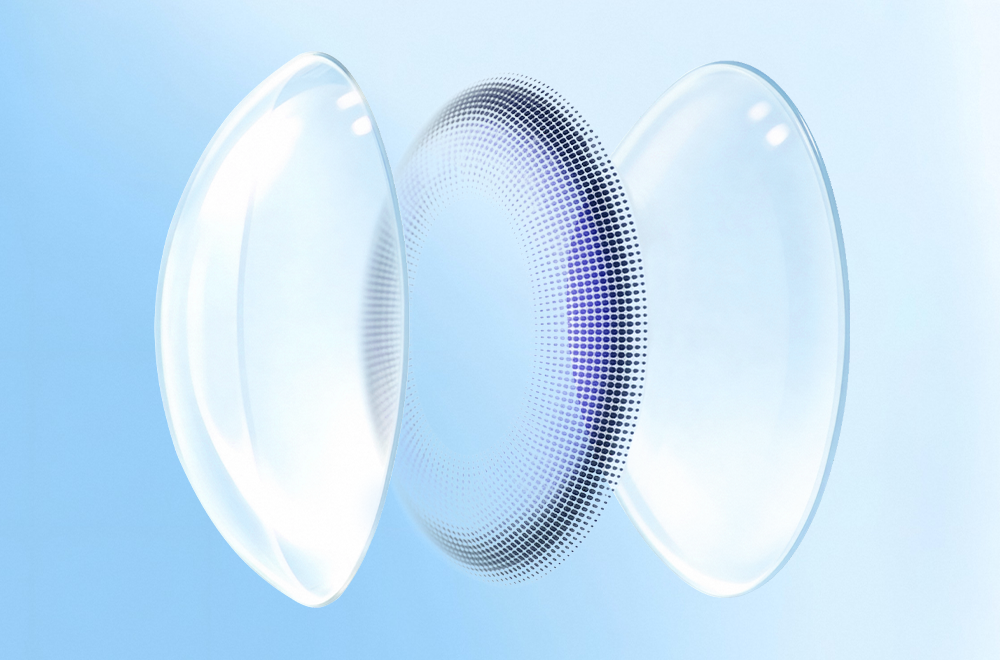
At LolaDiva, we've observed that customers with BC 8.6 in clear lenses often find that an 8.5 or 8.4 BC in colored lenses feels more comfortable — especially those asking can you get prescription colored contact lenses with the same BC — because the added pigment layer effectively "flattens" the lens's behavior on the eye.
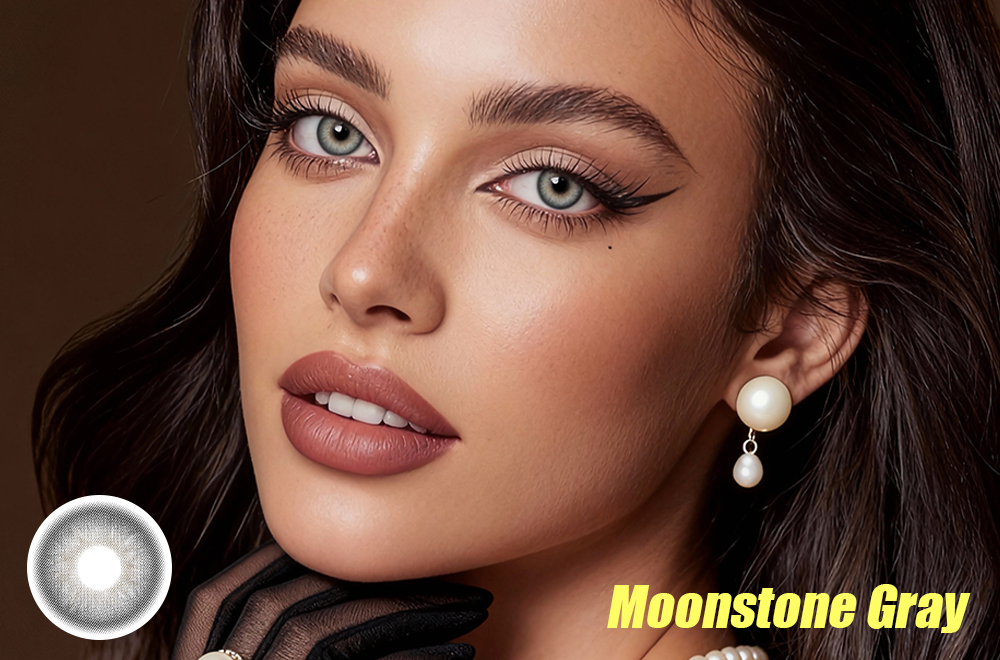
LolaDiva 1-Year Colored Contacts — BC 8.6mm, DIA 14.2mm, hydrogel, 38% water. Natural shades, lower cost-per-use, from $5.99/pair.
Moonstone Gray — Subtle grey-toned iris enhancement for everyday elegance. Works beautifully on dark brown eyes.
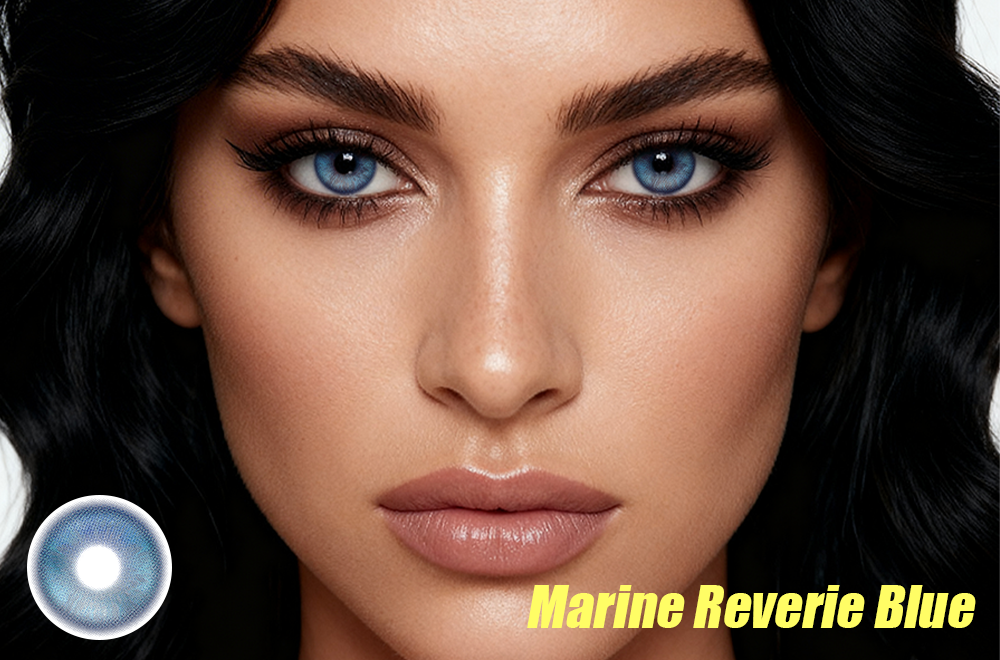
 Marine Reverie Blue
 — Ocean-inspired blue tint with a soft limbal ring. Best for users seeking a bold but natural color shift.
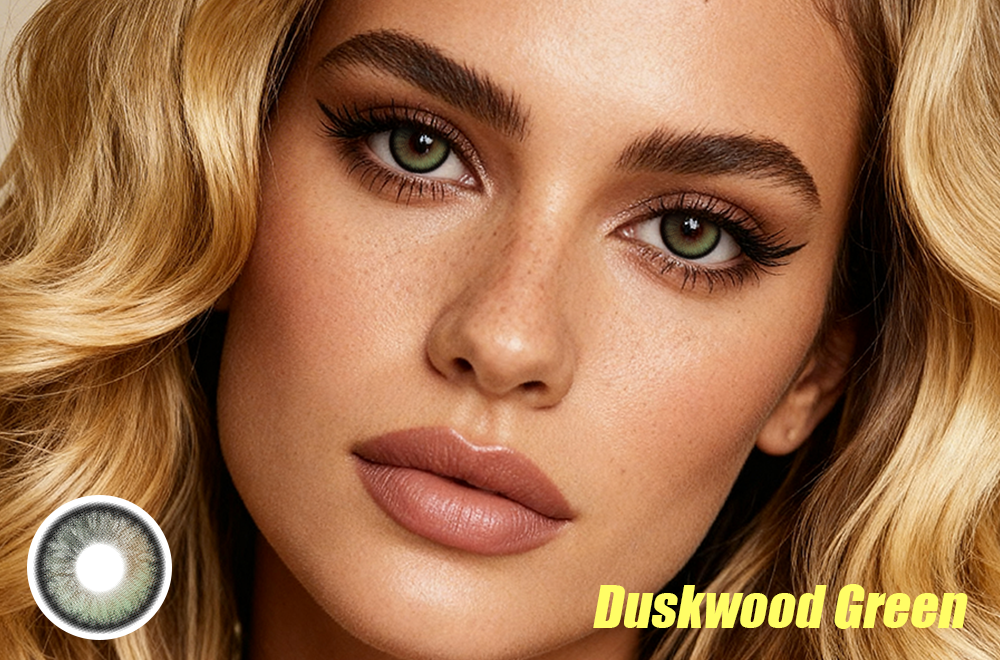
 Duskwood Green
 — Deep forest green with subtle hazel undertones. Ideal for warm skin tones and outdoor settings.
The Clear Optical Zone Must Align With Your Pupil
Colored lenses have a fixed clear zone in the center (the "pupil hole"). If the lens doesn't center properly due to a wrong BC, the colored ring can drift in front of your pupil, causing blurred vision or a "halo" effect. This is especially problematic in low light, when your pupils dilate and may expand beyond the clear zone.
This is why proper centration is even more critical for colored lenses than for clear ones. A slightly off-center clear lens is annoying. A slightly off-center colored lens ruins your vision.
LolaDiva Daily Colored Contacts — BC 8.6mm, DIA 14.5mm, hydrogel, 58% water. Daily disposable color lenses as low as $1.99/pair.
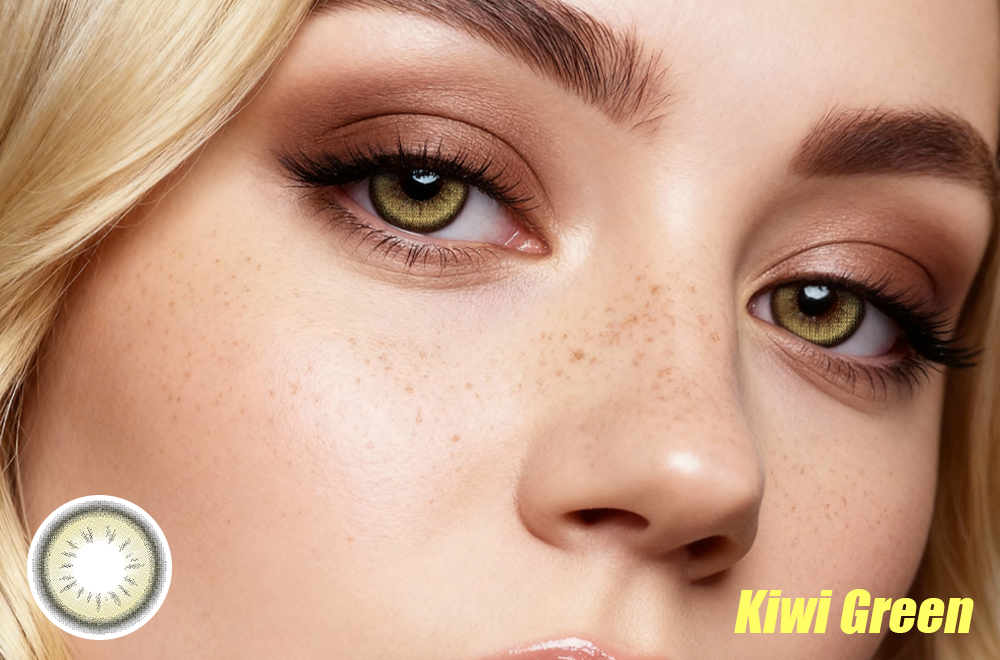
Kiwifruit Green — Vibrant green with yellow undertones. High-impact color for parties, cosplay, and statement looks. One day, zero cleanup.
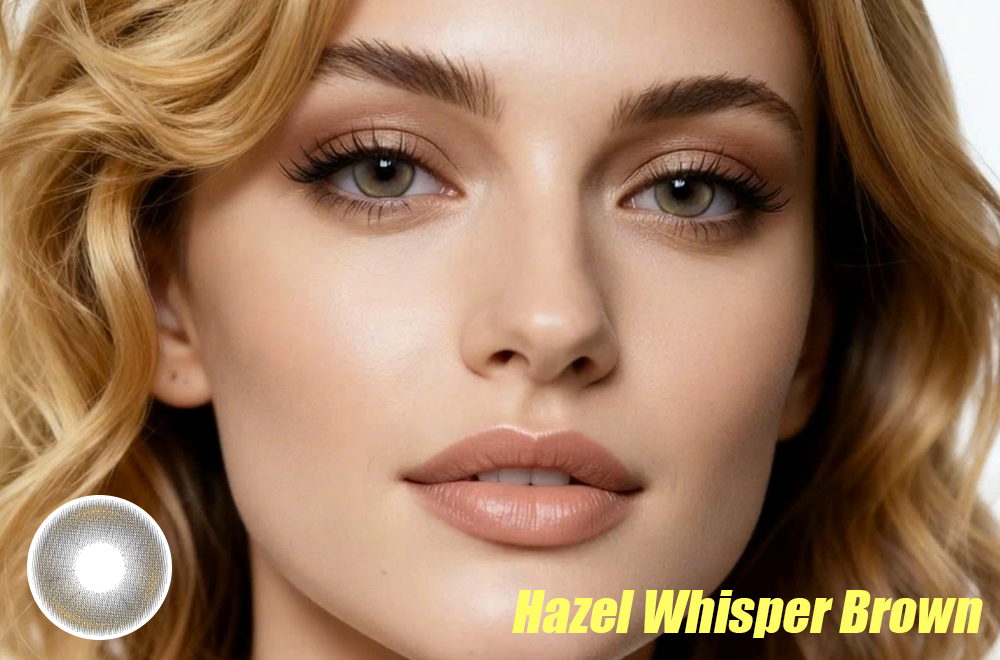
 Hazel Whisper Brown
 — Soft amber-brown blend that brightens dark eyes subtly. The most natural-looking daily colored option in the line.
 Lunar Feather Grey
 — Cool grey with a feathered edge design. Creates a soft, ethereal eye effect under both natural and artificial light.

--------------------------------------------------------------------------------
Common Contact Lens Brands: Base Curve & Diameter Comparison
Here's a real-world comparison of popular brands. Notice how some offer multiple BC options, while others use a "one size fits most" approach.
|
Brand
|
Available BC (mm)
|
DIA (mm)
|
Lens Type
|
Notes
|
|
Acuvue Oasys 1-Day
|
8.5, 9.0
|
14.3
|
Daily
|
Two BC options for better fit range
|
|
Dailies Total1
|
8.5
|
14.1
|
Daily
|
Single BC — relies on material flexibility
|
|
Biofinity
|
8.6
|
14.0 |
Monthly
|
Silicone hydrogel — high oxygen permeability
|
|
Air Optix Plus HydraGlyde
|
8.6
|
14.2
|
Monthly
|
Good for extended wear
|
|
Bausch + Lomb ULTRA
|
8.5
|
14.2
|
Monthly
|
MoistureSeal technology
|
|
FreshLook ColorBlends
|
8.6
|
14.5
|
Monthly Color
|
Larger DIA — may feel tighter
|
|
LolaDiva Color Lenses
|
8.6
|
14.2
|
Daily/Yearly Color
|
Balanced DIA for comfort + centration
|
Important: Manufacturers update products frequently. Always rely on your eye doctor's prescription rather than this table alone.
Can You Switch Brands with the Same BC? The Dangerous Myth — Do You Need a Prescription for Contact Lenses When Switching?
Short answer: No. Not without a professional refitting.
Here's why. Two lenses can share the exact same BC (say, 8.6mm) and fit completely differently because of:
Material modulus: A stiff silicone hydrogel lens won't conform to your eye like a soft hydrogel lens.Water content: High-water-content lenses (58%+) fit flatter as they dehydrate throughout the day.Edge design: A sharp edge feels completely different from a rounded, tapered edge.Center thickness: Thicker lenses move differently than thin ones.
Think of it like shoe sizes. You're a size 9 in Nike. That doesn't mean every size 9 shoe from every brand will fit your foot. The last (mold shape), material, and construction all matter.
The same BC is a starting point, not a guarantee. Your prescription is written for a specific brand and model that your doctor has physically verified on your eye.
How to Read a Contact Lens Prescription: Finding Your BC
Your BC is listed on:
Your contact lens prescription (not your glasses prescription — those are different)The side of your lens box The foil blister pack inside.
Look for:
BC or B.C. followed by a number (e.g., BC 8.6)DIA or Diameter (usually right next to it)PWR or SPH (your lens power)
Sample prescription:
|
|
Base Curve
|
Diameter
|
Power
|
| Right Eye (OD) |
8.6
|
14.2 |
-2.50
|
|
Left Eye (OS)
|
8.6
|
14.2 |
-2.50
|
If you can't find your prescription and need help with how to read a contact lens prescription, call your eye doctor's office. They keep records and can provide a copy. Never guess your BC.
Warning Signs Your Base Curve Is Wrong: A Self-Check Guide — and How to Treat Eye Irritation from Contact Lenses
Use this checklist if you're experiencing discomfort with new or existing lenses:
|
Symptom
|
Likely Cause
|
Action
|
|
Lens feels stuck at night
|
BC too steep
|
See your doctor for refitting
|
|
Vision blurs after blinking
|
BC too flat
|
See your doctor for refitting
|
|
Persistent redness
|
BC too steep or material allergy
|
Remove lenses, schedule appointment
|
|
Lens slides off-center
|
BC too flat or DIA too small
|
See your doctor for refitting
|
|
Gritty/sandy feeling
|
BC too flat (excessive movement)
|
See your doctor for refitting
|
|
Difficulty removing lens
|
BC too steep (suction effect)
|
See your doctor immediately
|
|
Halos around lights (with colored lenses)
|
Poor centration — BC or DIA issue
|
See your doctor for refitting
|
Are contact lenses safe? Yes — but only with the right BC. Never "power through" discomfort. Pain, redness, and blurry vision are your eyes' way of saying something is wrong. Continuing to wear ill-fitting lenses can cause permanent corneal damage.
--------------------------------------------------------------------------------
FAQ: Common Questions About Base Curve — Including What Are Toric Contact Lenses
Q: Can I measure my own base curve at home?A: No. While some smartphone apps claim to measure corneal curvature using your camera, they're not accurate enough for lens fitting. A keratometer or corneal topographer is required. Book an appointment with your optometrist.
Q: Does 0.1mm in BC really make a difference? And can contact lenses correct astigmatism with the same BC?
A: Yes. A difference of just 0.1mm can change how the lens sits, moves, and breathes on your eye. That's why your prescription specifies the exact BC — not "close enough."
Q: Can my two eyes have different base curves? And how much are daily contacts vs monthly?A: Yes, though most people have matching BCs in both eyes. If your corneas have different curvatures, your doctor will prescribe accordingly.
Q: Will my base curve change over time? Also, can you sleep with contact lenses or can you shower with contact lenses?A: For most adults, corneal curvature remains stable. However, conditions like keratoconus (progressive thinning of the cornea) or corneal surgery (like LASIK) can alter your BC. Get checked annually.
Q: Do colored contacts need a different base curve than clear contacts? What about can you get colored contact lenses for astigmatism?A: Not necessarily a different BC number, but the fit may feel different due to the pigment layer and often larger diameter. Always get refitted when switching to colored lenses, especially if changing brands. Browse our colored contact lens collection to see our BC and DIA specifications.
Q: What's the difference between BC in contacts and BC in glasses? Plus: how to put in contact lenses and how to insert contact lenses correctly.A: Completely different. Eyeglass BC refers to the front surface curvature of the lens and is measured in diopters. It affects optics and thickness, not physical fit. Contact lens BC is about matching your cornea's shape.
The Bottom Line: What Is BC of Contact Lenses and Why It Matters
Your BC is a medical measurement, not a preference. It exists because your cornea is unique — as unique as your fingerprint. A lens that fits your friend perfectly might suffocate your eye or slide around like a loose hat.
Here's what to remember about what does bc mean in contact lenses:
Never guess your BC. Always use your prescribed measurement.Don't switch brands without refitting. Same BC ≠ same fit.Pay attention to warning signs. Discomfort is data, not drama.Colored lenses need extra care. The pigment layer changes how the lens behaves on your eye.Get checked annually. Your eyes change. Your prescription should too.
At LolaDiva, every colored contact lens we sell lists the exact BC and DIA specifications so you can match them to your prescription with confidence. Wondering where to buy colored contacts in store? LolaDiva ships directly to your door with full BC/DIA specs listed. If you're unsure about your base curve, we always recommend consulting your eye care professional before ordering.
Your eyes deserve precision. Start with the right base curve. Whether you're comparing
how much are contacts across brands, checking does insurance cover contact lenses, or wondering are daily contacts more expensive than monthly — LolaDiva has you covered. Need help with how to clean monthly contact lenses or
how to remove contacts? Check our care guides. And remember:
is it safe to shower with contact lenses? Only with proper BC fit.
Medical Disclaimer
The information provided in this article is for educational purposes only and does not constitute medical advice.
Contact lenses are FDA Class II medical devices and should only be worn under the supervision of a licensed eye care professional. Always follow your optometrist's or ophthalmologist's instructions regarding lens type, wearing schedule, and replacement frequency. If you experience pain, redness, or vision changes while wearing contact lenses, remove them immediately and seek professional medical attention. LolaDiva is not responsible for any eye health issues resulting from improper lens use.


